Hiking to Ontario Peak in January is unusual for me. I don’t typically hike to peaks above 7000 feet during the dead of winter. Not only can it be hazardous to hike when there is ice and snow, I don’t have a vehicle that does well on roads during these conditions in the mountains, so I don’t go. It had been an unusual winter so far, with fall and spring coming simultaneously. The fall leaves were turning golden just as fresh spring grass was emerging in December. Now in January, the wildflowers were emerging, first in the desert, and now in the coastal foothills. Amid all this unseasonal weather, were a series of atmospheric rivers which had served to re-charge the reservoirs, ensuring a fresh supply of water for Southern Californians, causing rivers and waterfalls to flow abundantly, while simultaneously dusting the highest peaks of the LA mountains above 7000 feet in a generous blanket of snow.
Mishaps
With winter it seems, there are always going to be mishaps of every type, when it comes to hikers, meeting with trails in the mountains. Whether it’s not bringing the right gear, getting lost, or just being unprepared in general, things always seem to go wrong. No trail has claimed more lives in recent years, than those on Mount Baldy, where tragedy struck in December, when a young mountaineer from Long Beach slid down the Devil’s Backbone, along with two others in their mid-thirties, from Guatemala, Juan Lopez, and Bayron Garcia.
They Shut it Down
Directly after this occurred, the wilderness area of Mount Baldy was effectively shut down, temporarily, with the aim of protecting not just hikers and mountaineers, but first-responders, from having to venture into danger once again. There were calls to regulate the wilderness, which soon followed. I will always be against the wilderness being shut down for any reason. It is one of the freedoms we enjoy to enjoy the wilderness which belongs to us unimpeded. Visiting wild places carries with them inherent risk. I will always be in favor of more warning signs being posted, and disclaimers. I know that SAR won’t fly in certain conditions. I am in favor of it being their own call whether they want to attempt a rescue if the conditions are hazardous. I feel they should not be put in danger, and at that same time, we should be free to take risks, if we choose to.
Wilderness Closures
Freedom is a slippery slope. Take away one freedom, there goes another. Some feel it’s the government’s duty to protect us, warn us, etc. Closing the wilderness may delight some. But for others it takes away their freedom to safely practice their craft, be it mountaineering, ice climbing, or any other reason one might be inclined to be outside. It’s a slippery slope. We don’t need a babysitter, we need an advocate. Not everyone wants the wilderness closed. Everyone matters, so this is a big issue. Still, it is important to respect closures and the people who work to keep up safe like SAR, and law enforcement, since they are just doing their jobs.I will take a limited closure over a full one any day.
Timber Mountain or Ontario Peak?
So here I was, about to attempt a hike to Ontario Peak, or Timber Mountain. I had my heart set on hiking to Ontario Peak. I heard microspikes were ok to use, from a reputable source, who I considered an authority on the mountain. This source, had summited these mountains hundreds of times. If they were donning microspikes versus crampons, I noted it, and decided perhaps a winter time hike to Ontario Peak was actually feasible.
Here We Go
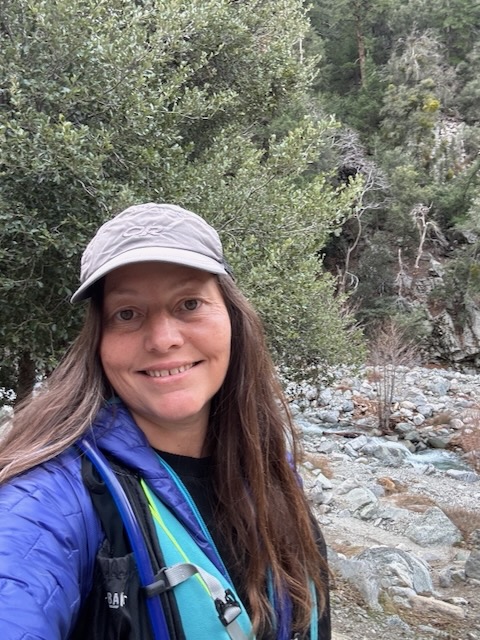
I departed the trailhead in Icehouse Canyon around 7:30 am. It would be my second time hiking to Ontario Peak. The first time I visited here, I was fairly new to hiking. It was summer time and I hiked to Ontario, and Bighorn Peaks, for two peaks in one day. At that time, it was one of the most exciting things I had done. I ran into a few hikers I knew at the trailhead, who I would meet up with again later at the peak. I was so fast back then in 2022, and able to get to both Bighorn and then Ontario, well before these two gentlemen. I was probably at the peak of my hiking. I remember falling backwards on a boulder, after they asked me to take their photo.
Slip Trip or Fall?
Dumb mishaps can happen to anyone, even just standing around at the peak. Anytime hiking in snow is combined with a steep incline, it becomes dangerous. I did not know what was in store on Ontario Peak. Everything about hiking is calculated risk. Slipping, tripping and falling are one of my biggest concerns with hiking in general. You can trip on a rock or root, you can slide down a steep slope, or slip on ice. You can fall backward, frontwards, and in ways you never imagined. I have gone flying on multiple occasions. All it takes is a lapse in focus, and where you are stepping. Shadows on a bright sunny day can cause you to miss a step, or step next to a rattlesnake. That is a summertime problem, and in winter that is one thing you do not have to think about much, since they only seem to come out if it’s warm and sunny.
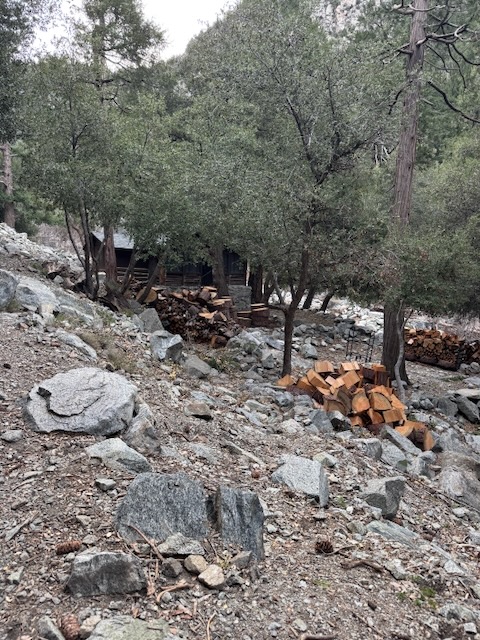
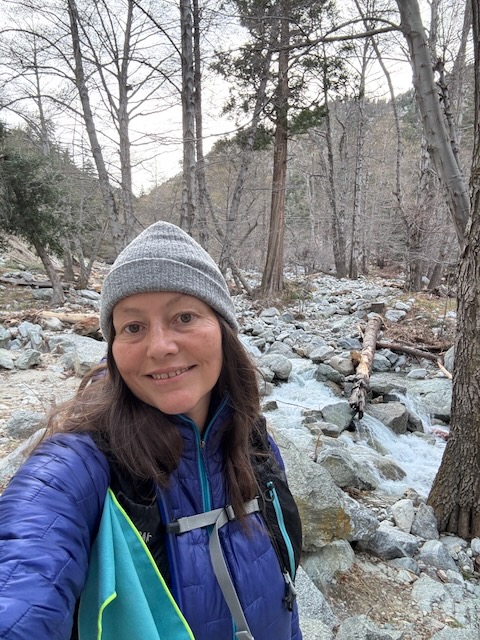
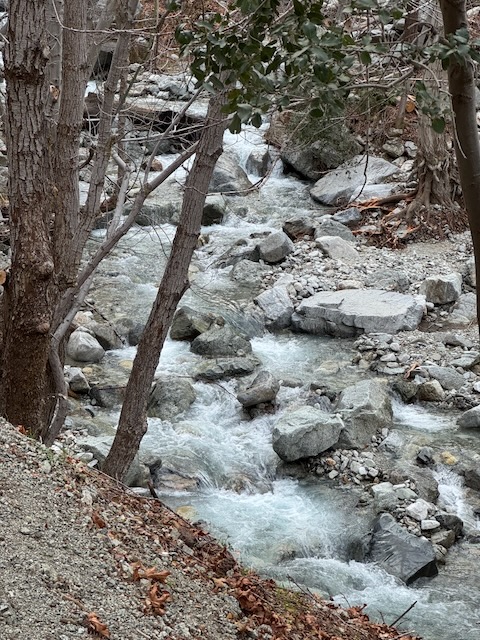
I made my way through the canyon. It was an unusually peaceful morning, with few other hikers on the trail.Waterfalls were flowing at full force, with clear, slightly blue tinged alpine meltwater flowing through it.
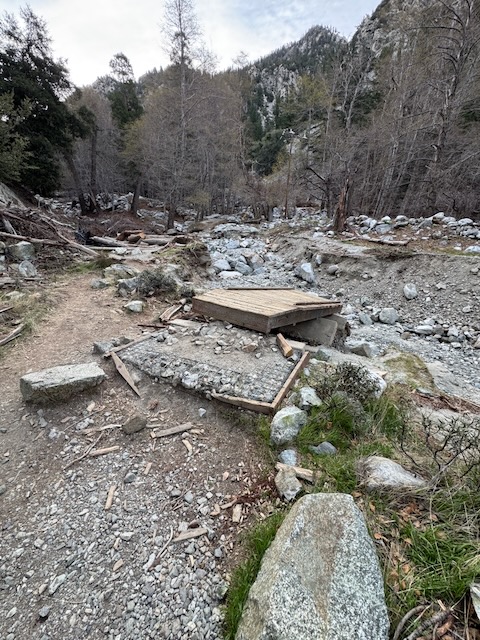
After about ½ mile I was met with the first of several washouts. The little wooden bridge, which crossed a small tributary, was violently uplifted off the ground, suspended mid-air. The trail was easy enough to follow though, and I continued on.
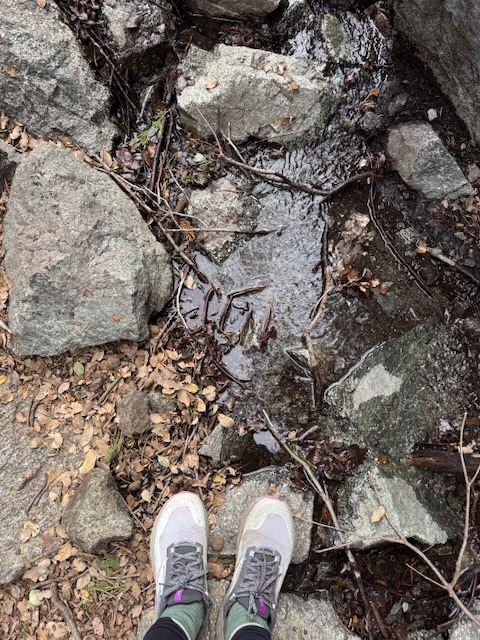
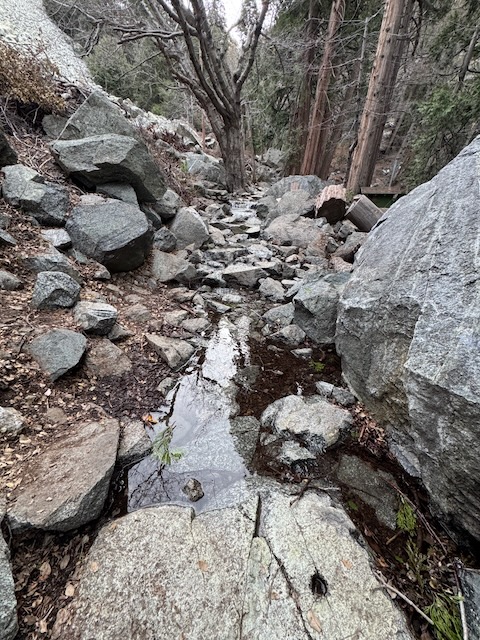
I would count about seven water crossings, running over the trail. At one point, the stream was running along the actual trail, with water cascading down each stop.
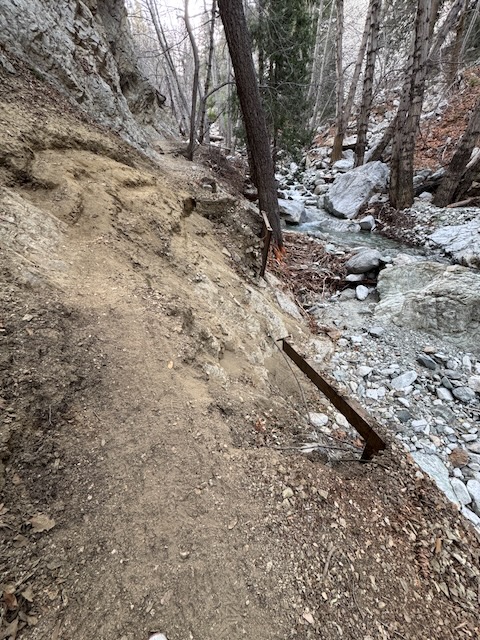
After another .25 mile, I encountered another washout, which was way worse. The trail was a mere foot wide, dropping off 10 feet towards the river bed (hard to see in photo), with jagged sections of retaining wall, ripped apart in several areas.
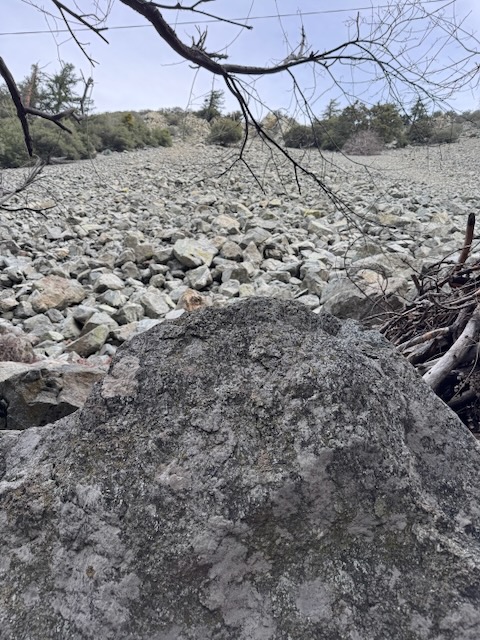
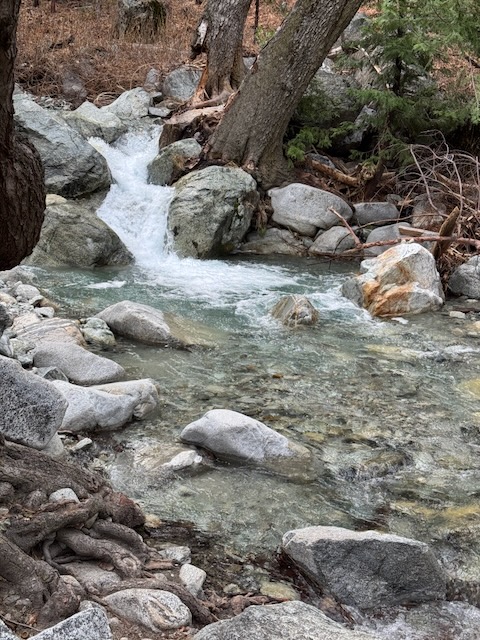
New streams had formed, some flowing past cabins on both sides. On the opposite side of the river, a hiker had set up a tarp tent alongside a crumbling stone fireplace, at the site of one of the many cabin ruins which dot the canyon. Camping is not allowed in Icehouse Canyon along the river. You must be 200 feet from a stream in the Cucamonga Wilderness for dispersed camping.
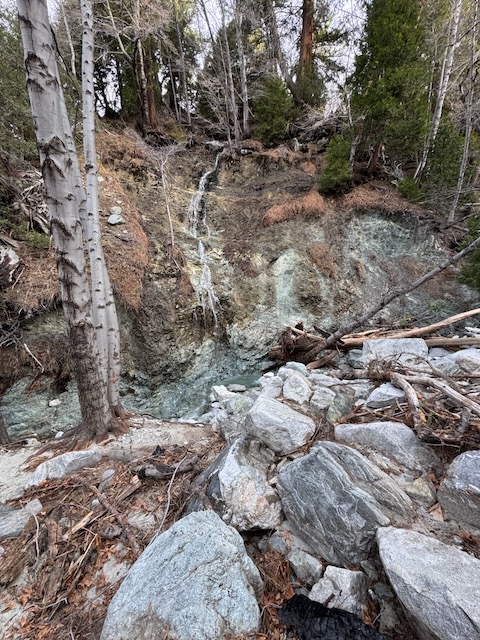
About a mile in, I passed by the turnoff for Chapman Trail. Soon after this, I crossed over log bridge, and noticed a cascading waterfall, descending the canyon wall. Where wasn’t water flowing today?
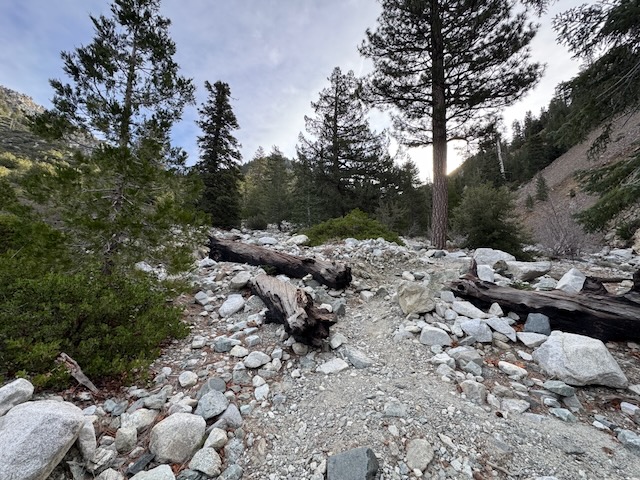
Continuing on, there was more re-routing of the trail, especially right before the switchbacks. It is usually a leisurely stroll through a rock garden of humongous boulders, with a well-defined path.
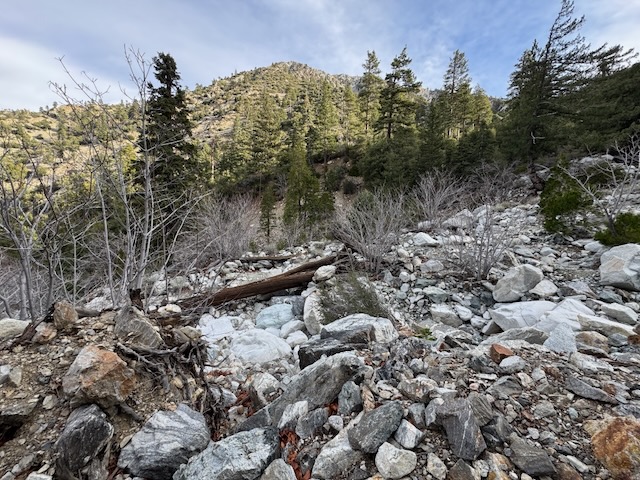
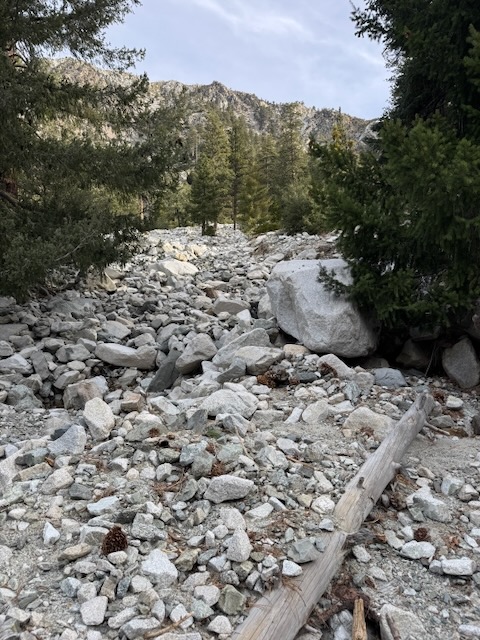
As I past by the Cucamonga Wilderness sign, what is usually a somewhat predictable trail, engrained in my memories, had been re-imagined. I came upon, three huge rock falls, each over twenty feet wide and ten feet tall. These deep chutes of broken, tumbled granite rock would have to be climbed up and over. Rockfalls such as this are somewhat frightening. Anytime I pass through a dry river bed I think about floods. Anytime I pass through a rock chute, I am aware, more could be on its way. Everything in nature has its tipping point.
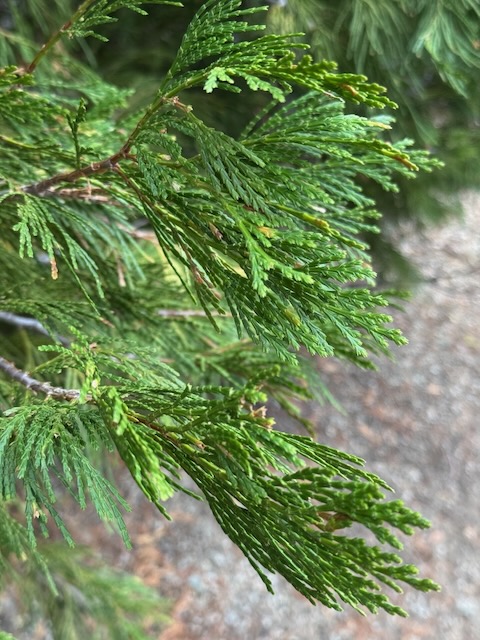
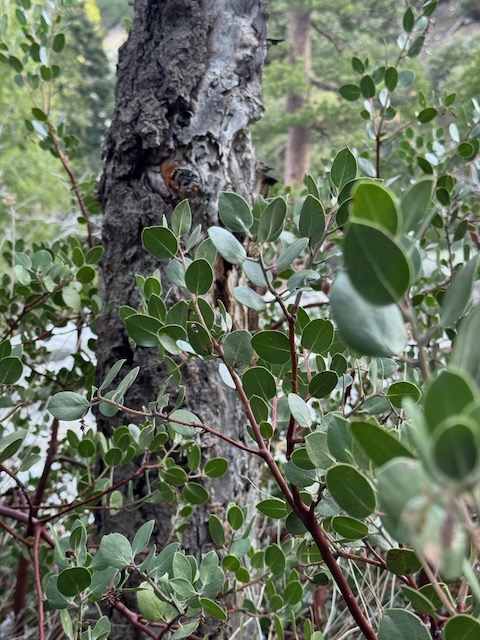
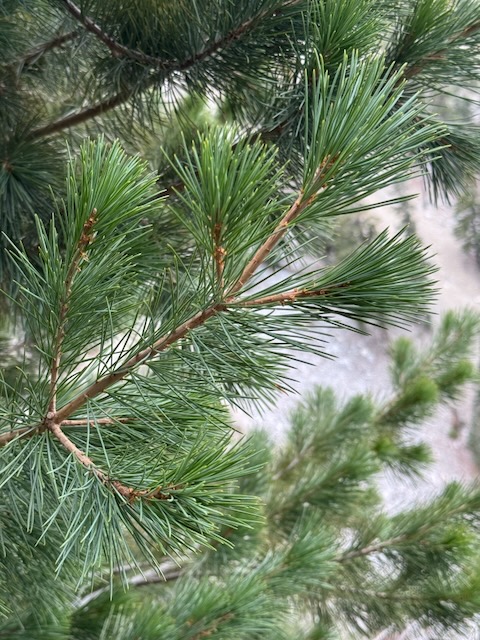
At this point I was 2.2 miles along on my hike, and was enjoying the beautiful nature all around, when I briefly lost the trail, referring to my map.
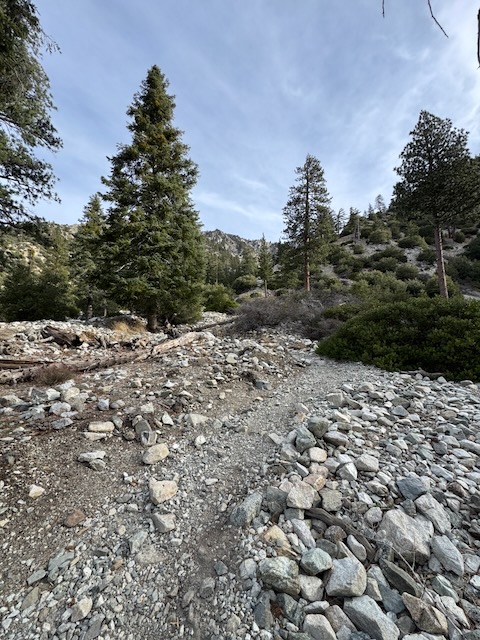
I remembered the general lay of the land of the canyon, knew the direction I needed to head in, to make it to the switchbacks. It was not long before I re-connected with the trail and headed up the switchbacks, at a steady pace.
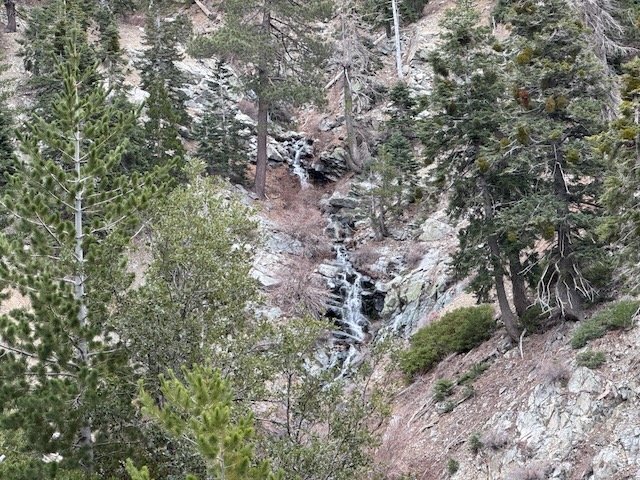
After I was halfway to the saddle, I still could not see any evidence of snow, yet noticed another streaming waterfall to my right, running down the deepest part of the canyon.
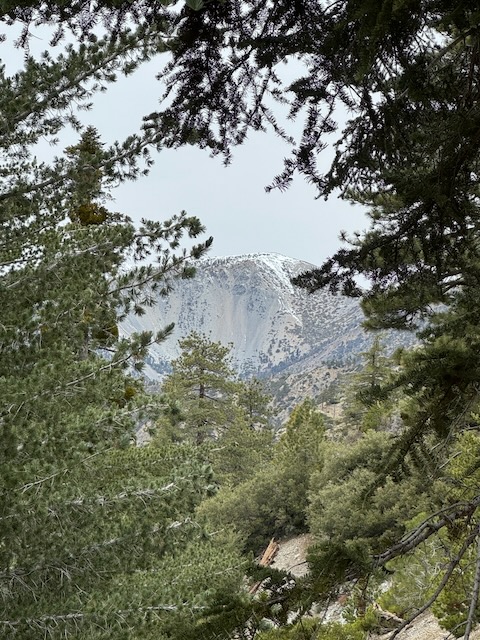
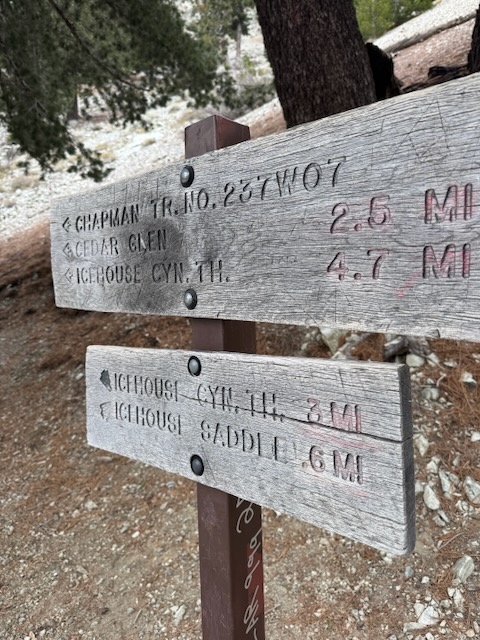
It was not until after I passed where Chapman Trail unites with Icehouse Canyon Trail, that I noticed the very first clump of melting snow along the trail. Soon after, I would see a hillside partially blanketed in snow.
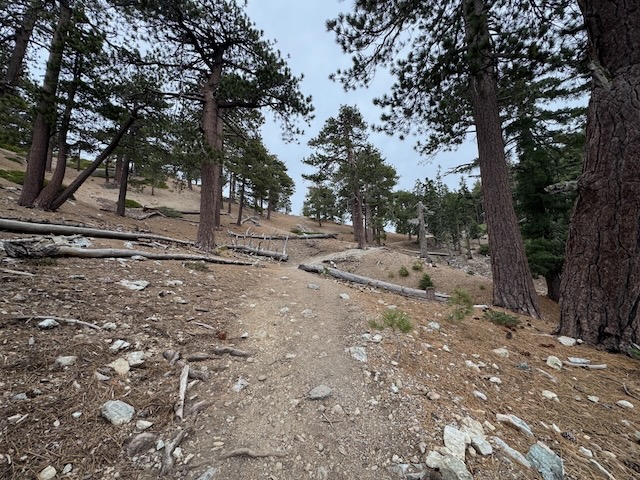
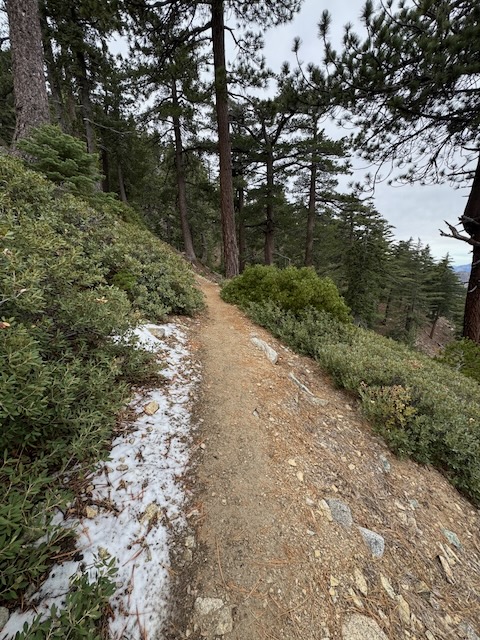
I made it to the saddle, heading directly toward Ontario Peak, noticing the trail now had snow on it, though not very much, and not for long. As I hiked on, the patches of snow increased in frequency, and the shaded hillsides became more and more snow covered.
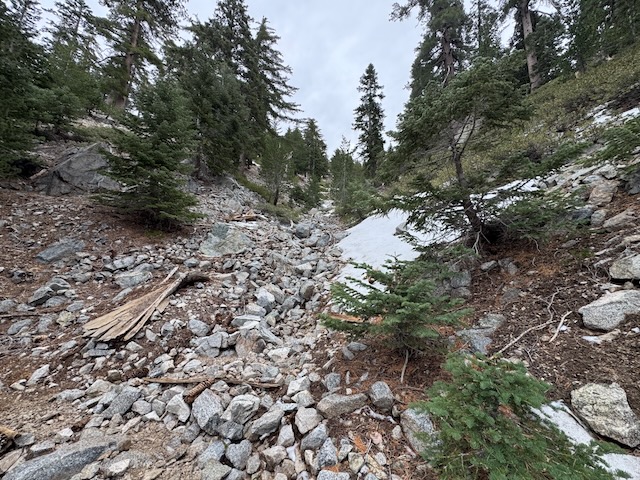
It felt like a waiting game, if and when I would encounter snow which denoted a need to wear the microspikes.
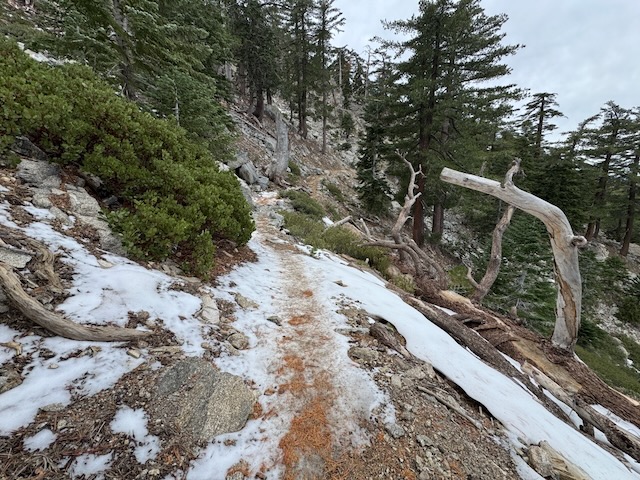
Just before Kelly Camp, the snow patches increased, and on went the microspikes, so I could retain good footing and not wipe out. There was just a thin layer of snow and ice, but sometimes that is all it takes.
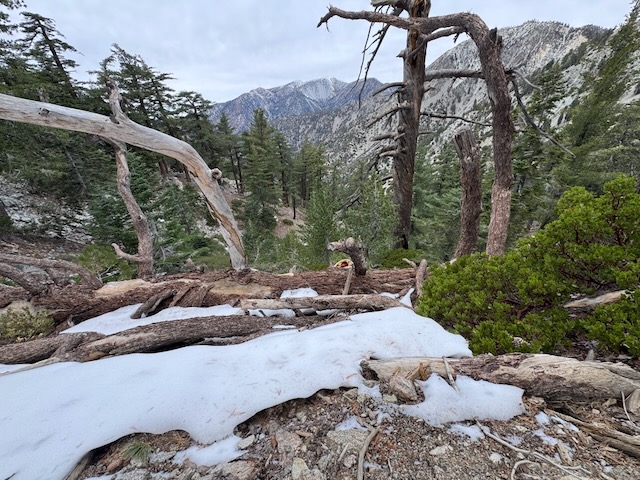
I would find there were huge patches of snow free trail intermingling with snow covered ones. I was now abusing my microspikes. Taking them off and on every few minutes is not a good thing to do either.
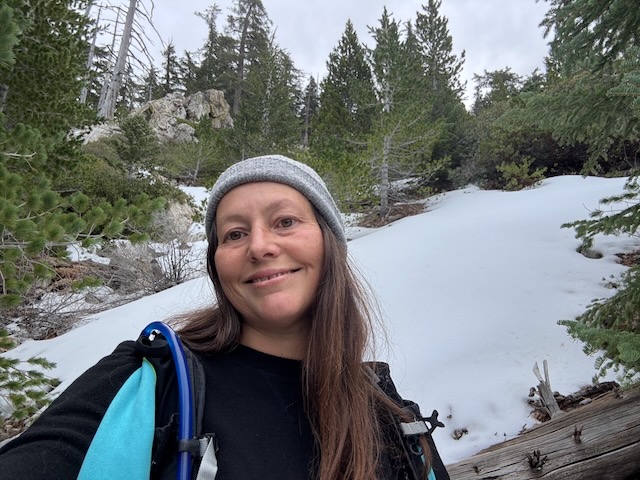
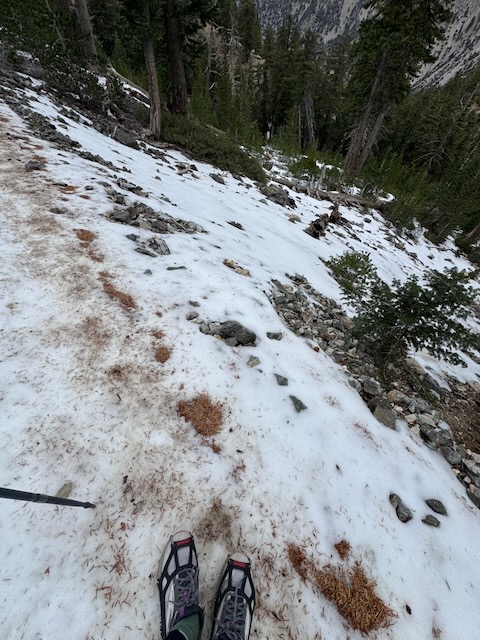
The combination of incline and snow was what did it. Microspikes on!
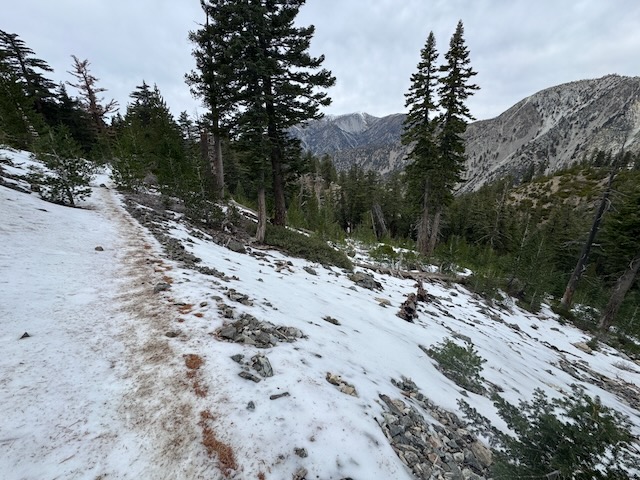
This pattern of alternating snow and dirt continued to Kelly Camp.
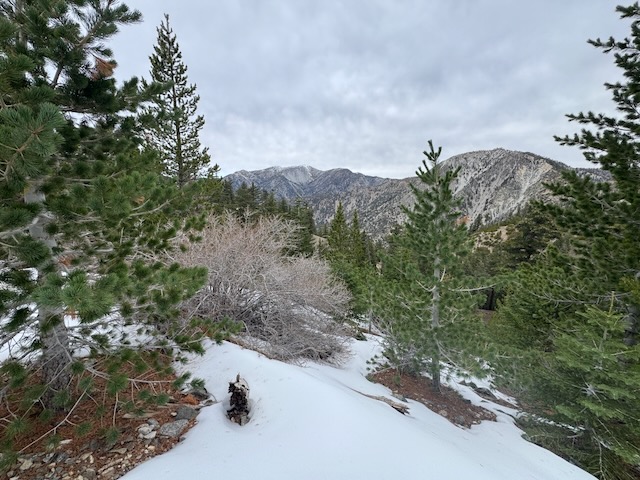
I was starting to feel like I was walking in a Winter Wonderland!
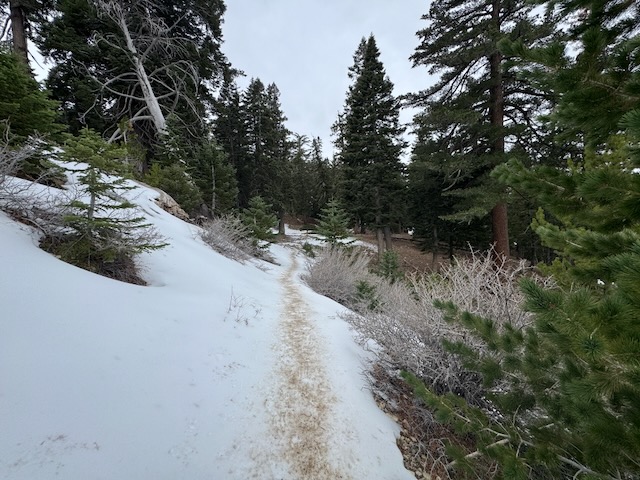
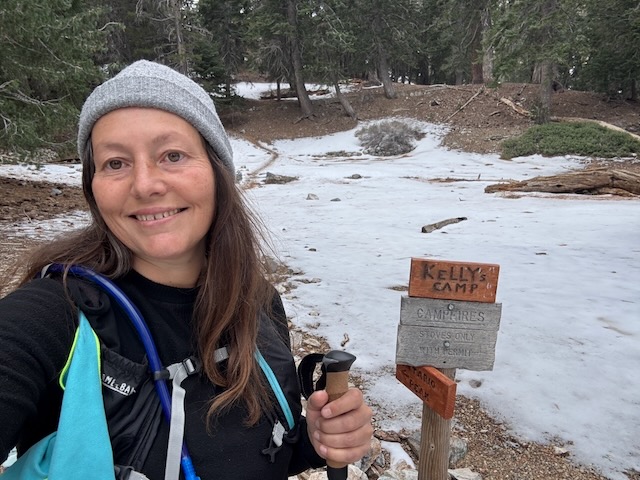
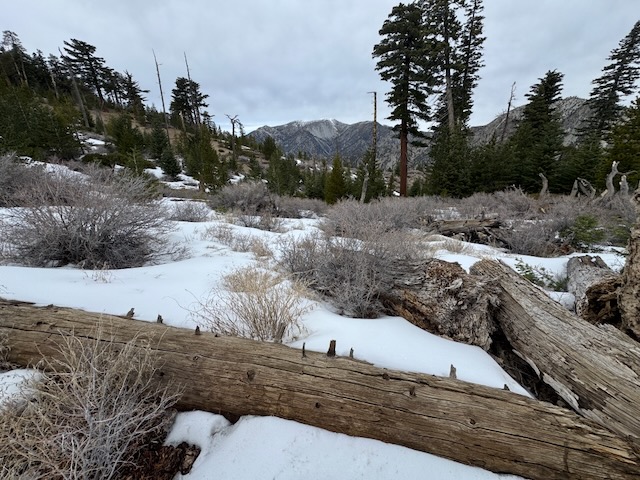
Just before the ridge, the snow was more continuous.
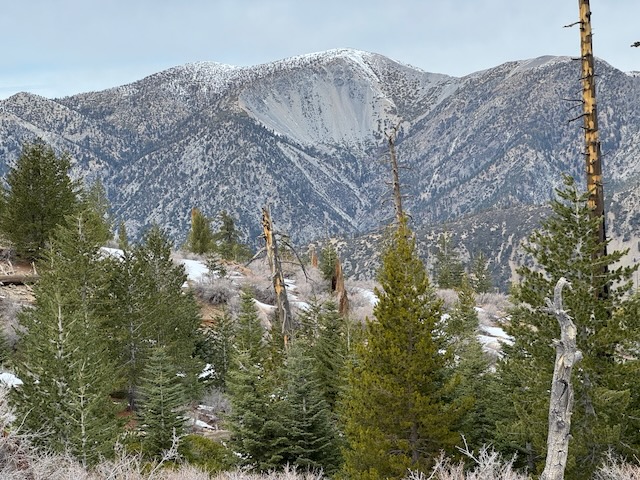
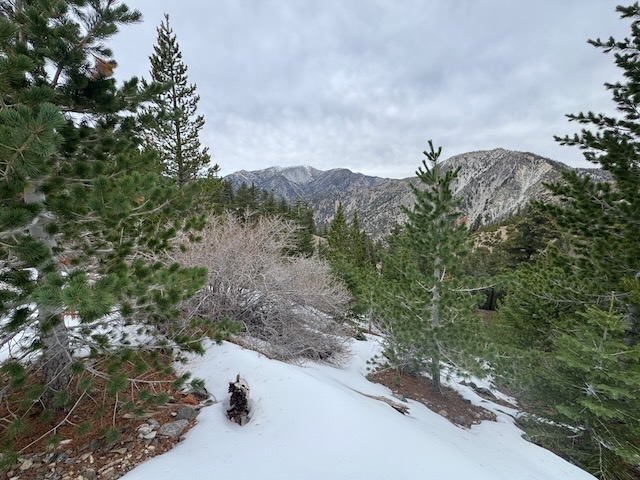
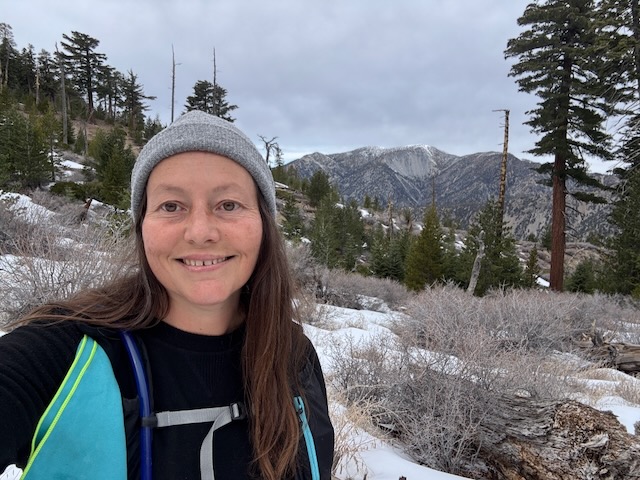
Felt nice to be up here in a snowy pine forest, on a warmer day in winter. It could not have been better conditions. I did not even need a jacket, just a warmer long sleeve shirt. But I had a puffy jacket, since the mountains are unpredictable.
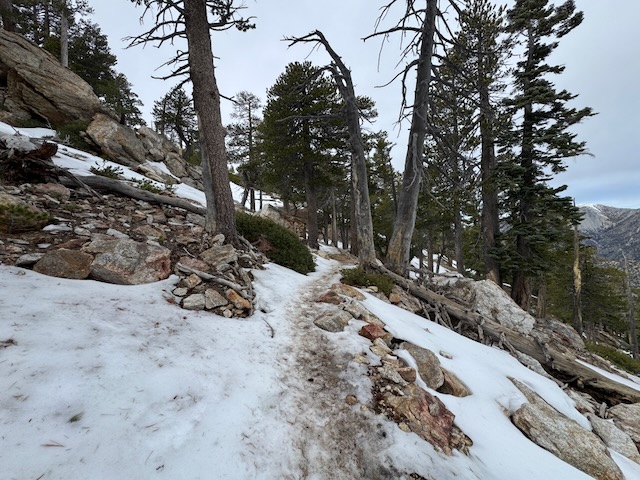
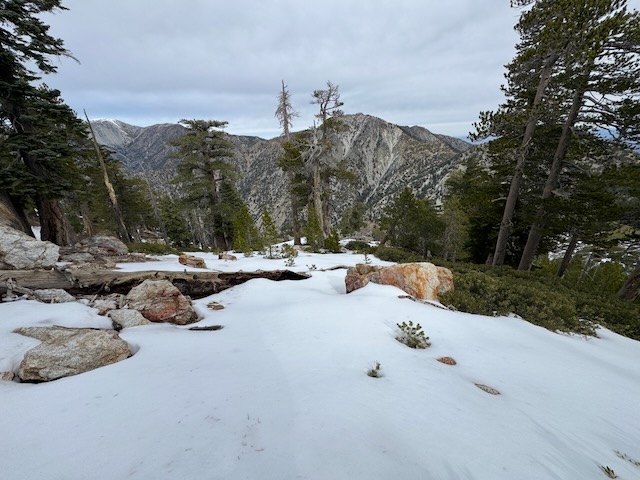
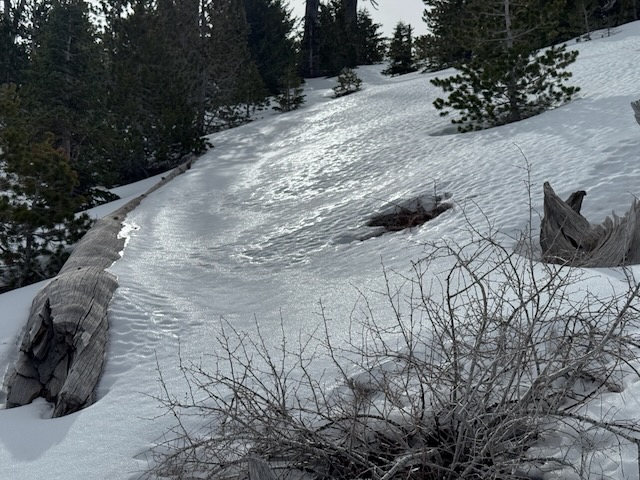
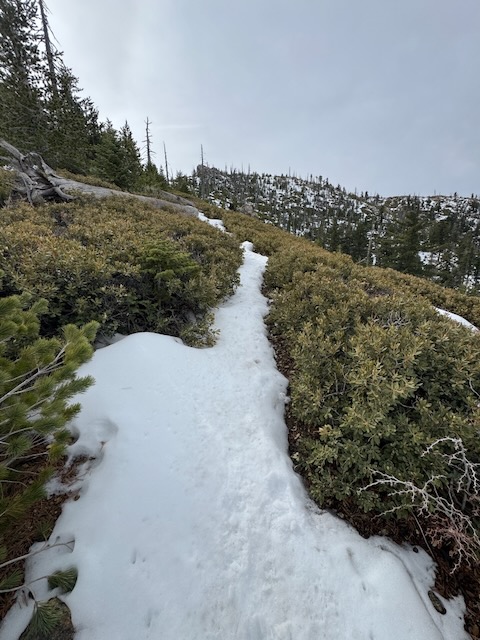
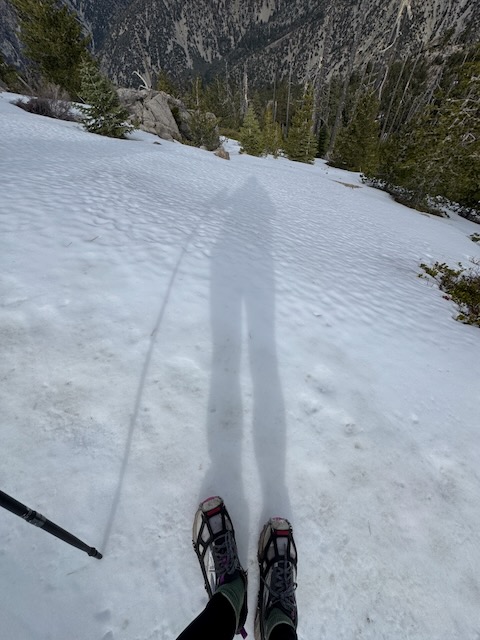
I was walking in a winter wonderland. But there were moments, that I wondered if this was a good idea. Standing there, I thought about turning around. I said, if it gets sketchier, I will go back.
This slope seemed unforgiving. Had I fallen here, I would have been in trouble. I stayed back from the edge. There were only a few spots like this, that worried me. Kind of resembles parts of the Devils Slide in Idyllwild.
Would I let fear take over, and rob me of this experience. I decided I would not. After weighing the terrain, conditions, air temp, overcast day with lack of sun, which could have turned the slopes icy, I continued on. I was ready to turn around if I encountered anything too treacherous, or narrow, beyond what I was seeing here in spot.
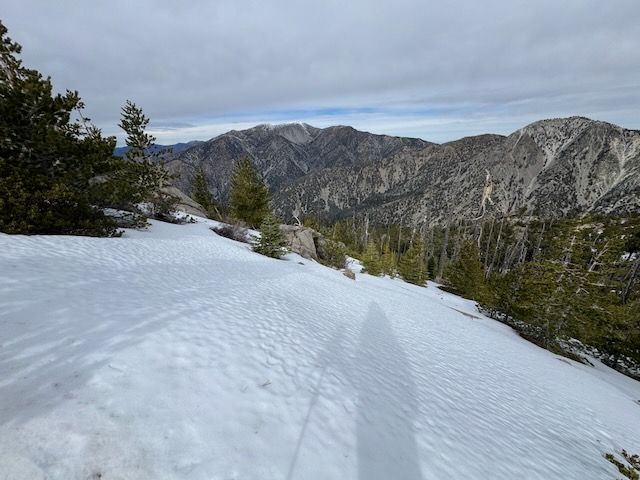
The trail remained relatively wide in places where it needed to be. I continued on to the peak, taking my time, being as careful as possible with my steps.
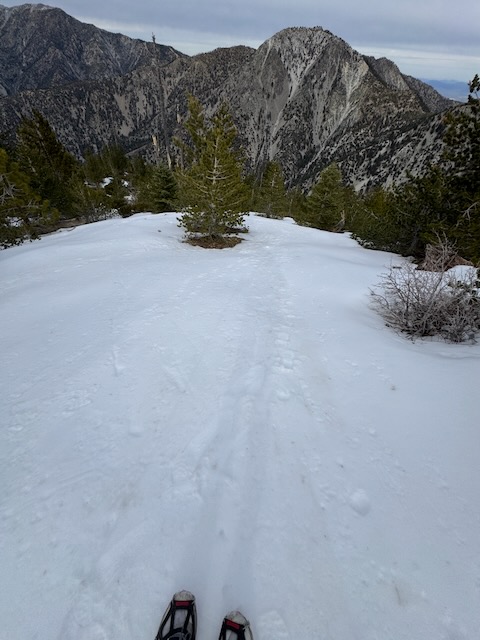
The trail itself was not technical. It was the sections of steepness alongside the trail which I was wary of. They were by no means equal to the backbone trail, on Mount Baldy, but were steep enough that a slide down, could have resulted in fatal injuries nonetheless.
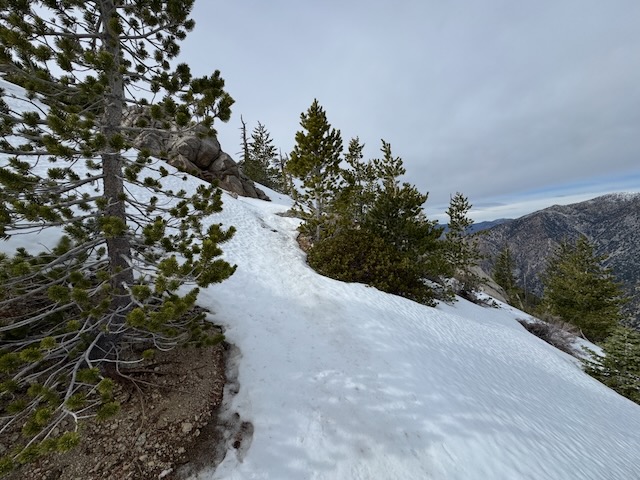
As I trod on, slowly edging closer to the peak, at half my usual pace, I continually questioned my decision to hike up here. But, I was reassured, when another hiker in microspikes came down the trail, solo, and seemed oblivious to the snow. Shortly after, two women passed by, coming from the peak. Neither was in crampons or carrying an ice axe. I thought maybe I was overreacting, about the hazards of hiking in places like this in winter. There might still be drop offs, or edges to steer clear of here and there on ahead.
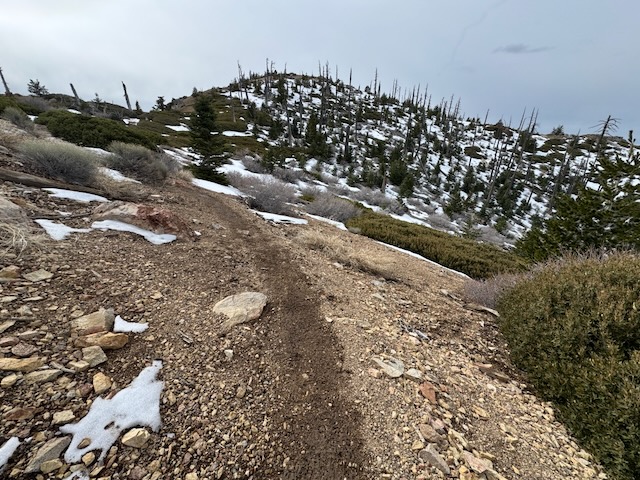
But there would also be a snow free patch here and there. I kept the microspikes on because I was so close, and knew more snow was right around the corner.
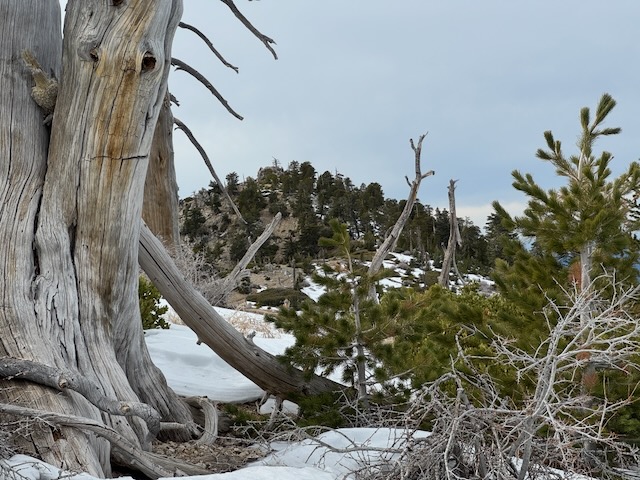
I could now see the peak on ahead. I wanted to finish the hike, but felt like I had a mild case of summit fever.
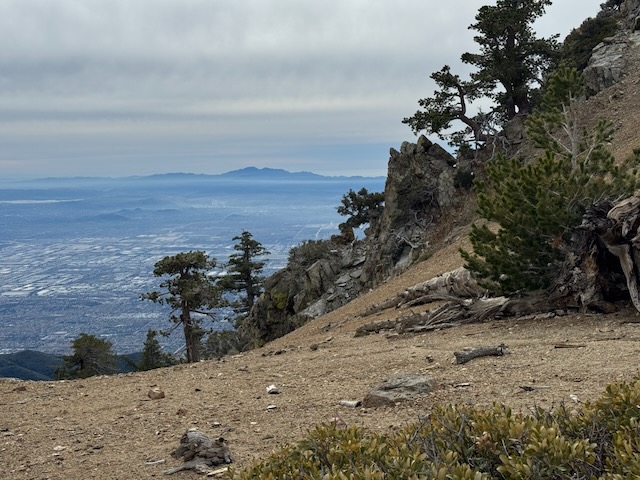
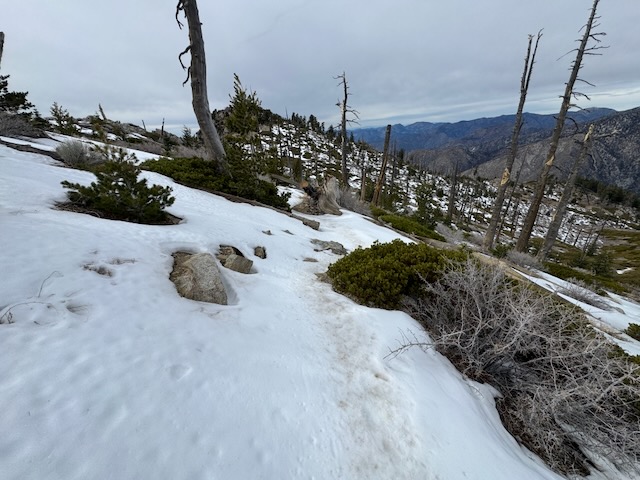
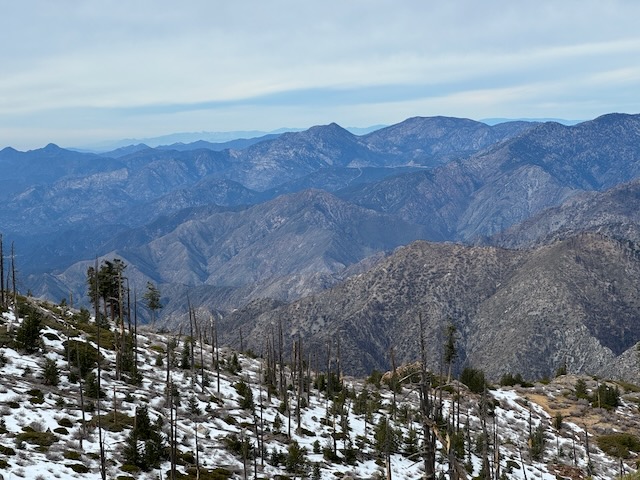
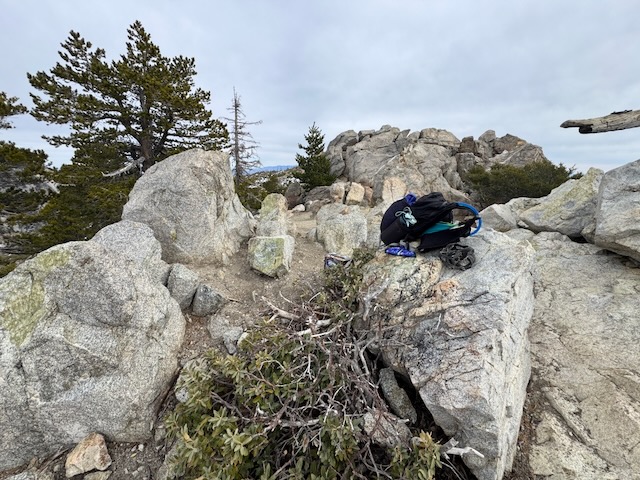
There are very little snow on the last few hundred feet of climbing up to the peak, and the peak area was snow free.
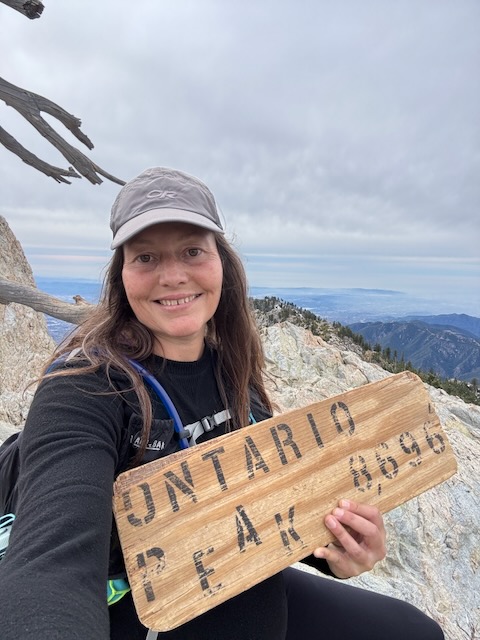
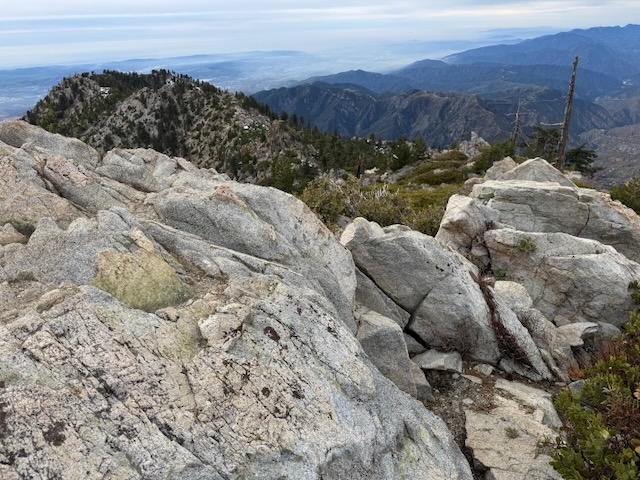
Gazing off in the distance from the peak, beyond the massive granite spires, and stoic looking limber pine in the rock, I noticed the entire south facing side, clear to Turtles Beak, free of snow. In fact, much of the wilderness area, I had driven past on the way to Icehouse Canyon was also snow-free. Amazing I thought, that this small area, still held on to some much winter through weeks of warming spells.
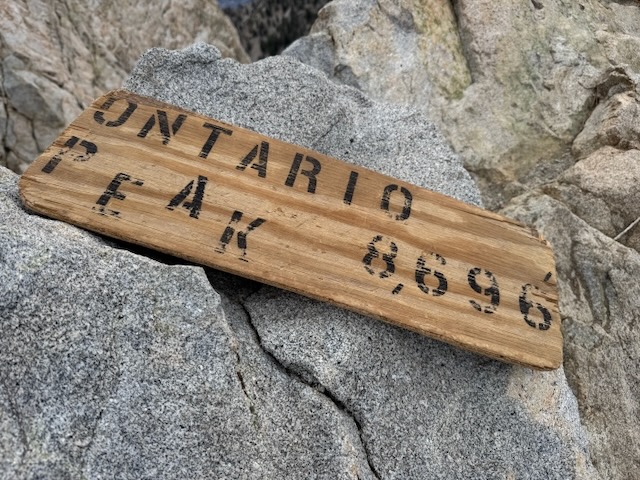
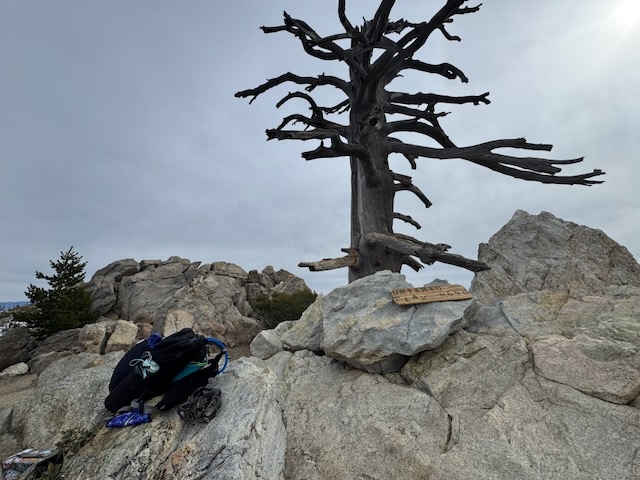
This hike had taken nearly twice as long, along the section from Icehouse Saddle to the peak, as it would have without snow. What may have taken an hour, took over two hours. I would soon find that the way back would not prove to be much different, until I was able to pick up a faster pace past Icehouse Saddle, where the trail was free of snow and I could take off my microspikes.
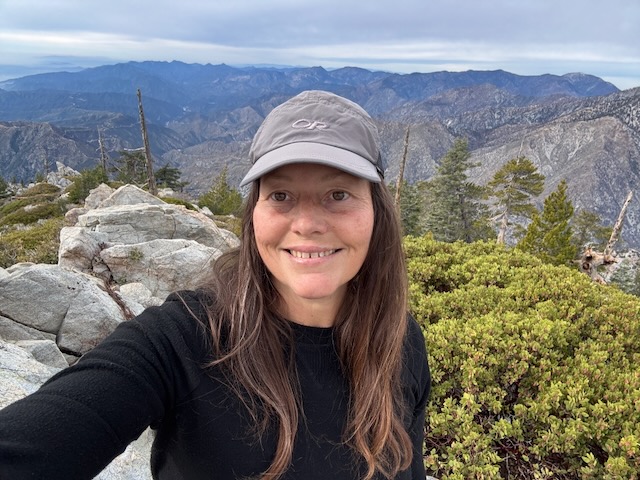
I was feeling grateful to have completed a new kind of challenge, hiking to a familiar peak, in a different season. I spent some time here, enjoying the views, a short while. Before heading back, I made a point to sign the trail register located in a sturdy ammo can, and continued on back the way I came.
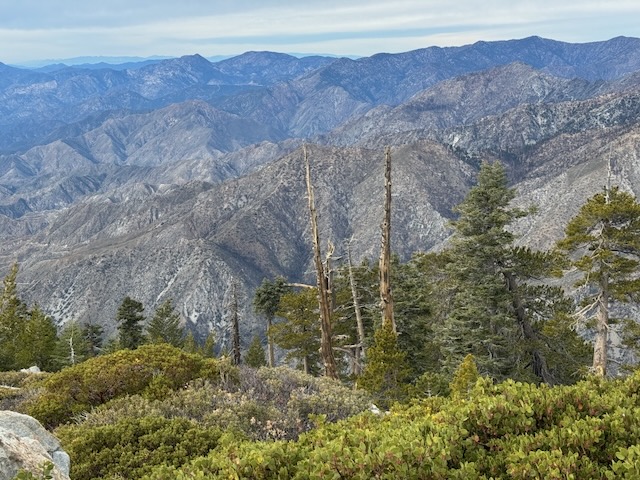
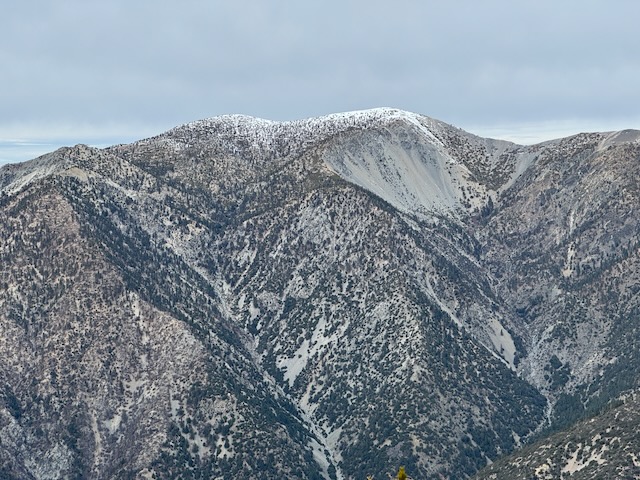
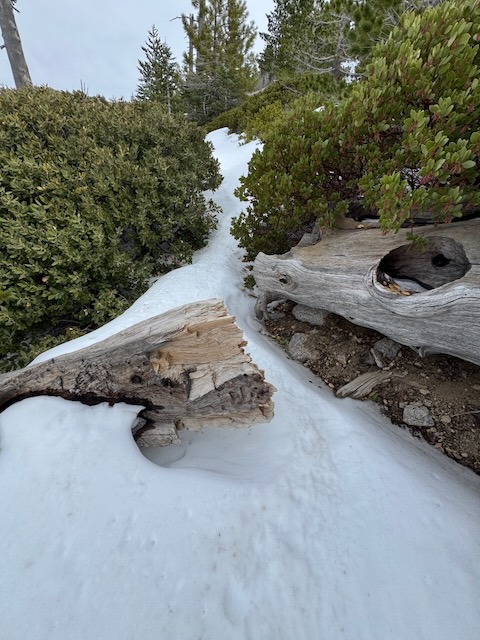
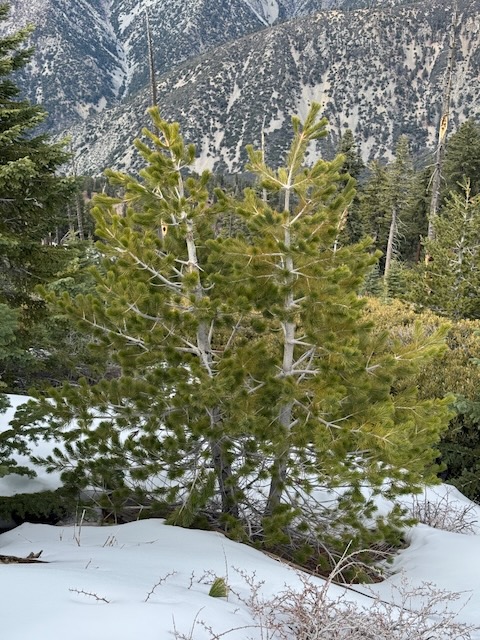
It was a peaceful day hiking through the wilderness of Icehouse Canyon. This is one of those places that I like to return to again and again. This would be my second time visiting here in the winter time. Although I have hiked here during times when there was ice and snow, I have not hiked to any of the peaks in this area during the winter season. Hiking in winter is not something to take lightly. There were times when I re-thought whether micro-spikes would ever be enough at Ontario Peak with snow. If you’re thinking about going when it’s snowy, consider how steep it is. If I was to fall, without an ice axe, I had little to stop me. I would be bringing an axe if hiking here to the peak with significant snow, for next time. At least there got to be a next time. The mountains don’t mess around. It does not need to be a blizzard, or freezing temps. These are things I will be keeping in mind, next time I pay a visit to the wilderness in wintertime.
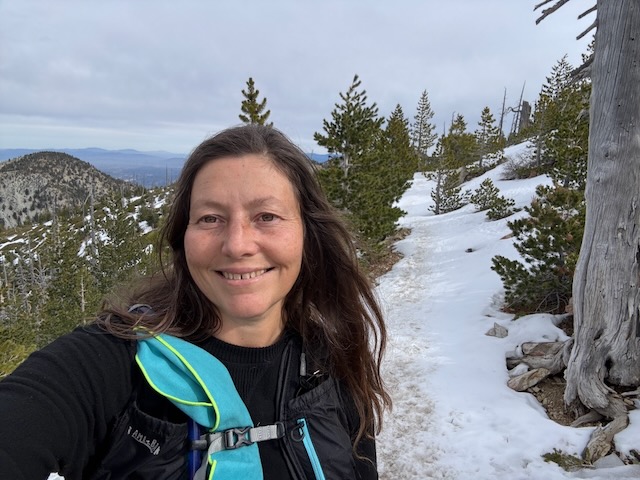
I hope you enjoyed reading this, and it is helpful in knowing what to expect, should you decide to visit here.
The Essentials
Just be sure to come prepared, bring the 10 essentials, and Pack Out Your Trash to keep the wilderness pristine for future hikers.
About me
I’m Serafina! I’m a writer and California girl who loves to go exploring. Hope you will get outside today, breathe some fresh air, and be happy!
Like and Subscribe to my Channel!
Follow my Journey @serafinabenjamin
Follow along on My Youtube Channel where I post videos!
Disclaimer:
The work on this blog is my opinion and my opinion alone and I am not responsible for the outcome if someone were to apply these thoughts to their own life. All text and photography copyright 2025 by Serafina, all rights reserved. Information and opinions provided are kept current to the best of the author’s ability. All readers’ usage of the ideas and opinions presented in the blog, are at their own risk. Be aware of the possible dangers of hiking, surfing, walking, cooking, and other activities, which may take place indoors or outdoors. By reading this, you agree not to hold the author or publisher of the content on this web site responsible for any injuries or inconveniences that may result from reading the blog, or partaking in any activity mentioned in the blog. Read the blog, and use its ideas, if you so desire, at your own risk.

 Serafina Hikes