
Well the short answer is yes. But it all depends on you, and your choices. Hiking, thru-hiking and backpacking are a way to be healthier, since we are on the move. When you free yourself from a sedentary lifestyle, there are amazing health benefits. We cannot reap the benefits, without proper nutrition to fuel the journey. According to The American Journal of Lifestyle Medicine, “An estimated 5.3 million premature deaths per year worldwide are attributed to physically inactive lifestyles.” So in other words, it’s time to get on the move. Both hiking and backpacking are ways to accomplish this.
The First Thru Hikers
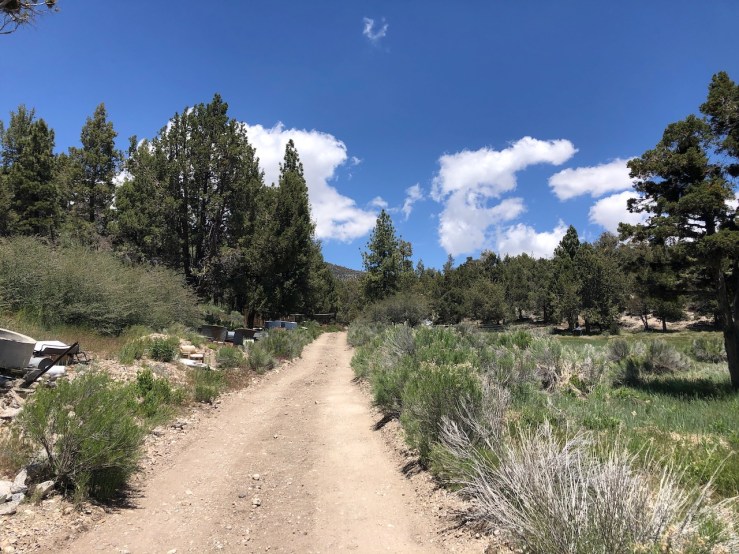
Early humans were thought to be the original thru-hikers, traveling up to 12 miles a day, on a journey, similar to thru hikers, and backpackers. They were in search of food back then. What we are searching for on our backpacking journeys varies greatly. Some of us might seek beautiful vistas, or simply wish to challenge themselves in some way. Others might seek peace and solitude in the wilderness. It really depends on who you ask. But what we seek on these journeys is not food, so we must bring it along with us, and sometimes plan stops to re-supply on the way. Getting the proper nutrition is not something to worry about for most backpackers, especially if the trip lasts little more than a week. Getting enough calories takes precedence over getting the right balance of nutrition, or vitamins. Not so much for long distance thru-hikers, since a nutritional deficit would result in long term damage to the body, in those hiking thousands of miles.
The Consensus
I have read in hiking forums such as Backpacking Light about how much you should eat, and how often, when backpacking. Most hikers seem to recommend 200 calories per hour, for strenuous climbs. One company, Backpacker’s Pantry, recommends consuming an average of 300-400 calories per hour when backpacking. In reality, anywhere from 300-600 calories can be burned per hour based on factors such as your body weight, the intensity of the hike, the terrain you’re hiking, how heavy the backpack is, your level of fitness, and how many rest breaks you take.

High Altitude
When hiking at altitude it’s not just about how many calories you need to consume to keep up your momentum. According to the journal Current Biology, it is better to choose carbs over protein, when hiking in places with an elevation of over 8000 feet, which is considered high altitude. This is in part, because carbs give you the kind of energy you need, along with making it much easier to breathe in thin air. Above all else, adequate electrolytes were a must across the board. According to Loughborough University, exercising vigorously on a daily basis, such as backpacking and hiking, leads to water, sodium, and electrolyte deficits. So don’t forget to pack in those Nuun tablets. These are my electrolyte of choice, since they are sweetened with Stevia, and taste great. I also like Bolt energy chews from ProBar, which have some caffeine in them too.
Check out the Backpacking Calorie Burn Calculator
Backpacking Food Hacks
One popular hack for predicting what your average nutritional intake on trail will be, is having the same meals every day. This is a bit boring, while equating to less label reading, making it easier to calculate your nutrition, based on the number of times each daily meal is consumed. But that can also get a little monotonous. It depends on how important variety is for you. Is it mainly for fuel, or is it for motivation, or both? For me it is both. I need some level of motivation, starting with my morning coffee, and a satiating, filling dinner, is my reward. That said, my hopes are that the backpacker meal I chose for the day will taste good. Sometimes that has not been the case.

Testing Out Backpacker Meals
The worst thing you could possibly do in planning your backpacking trip, is not bring enough food. The second worst thing is to not try out the flavors of the backpacking meals you chose, before you go. I know this, because I did this. I was ready to crawl into bed, at the end of a 16 mile hike into Hauser Canyon, from the terminus of the PCT, when I realized the lukewarm curried lentil backpacker meal I brought tasted like an inedible blob to me. I ended up eating some of my dried fruit, after eating about half of it, and going to bed. Choosing between taste and calories need not be your fate, if you sample your meals, before you buy mass quantities of them. The reviews online do hold weight, as far as how good each flavor is.
What’s Popular
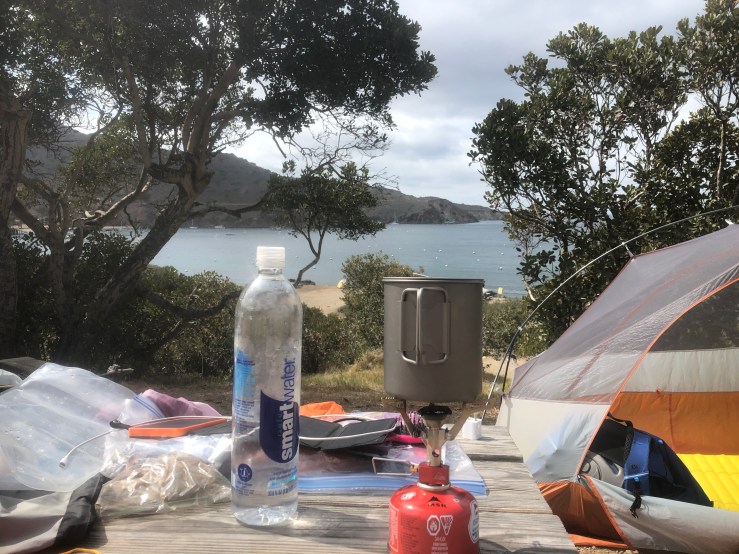
The most popular meals which backpackers enjoy are of the dehydrated variety. These include items such as instant mashed potatoes, instant rice meals, dehydrated meals such as pad thai, store bought ramen noodles, dehydrated breakfast scrambles, oatmeal, and instant soup packets. Most people like to bring dehydrated food mainly to save weight, where you just add water. You can add condiments, and other foods that travel well, to these to bulk them up, like salami, or cheese. If you’re a vegan, you might add TVP, protein powder, or dehydrated beans instead. In addition to all this, snacks such as bars, trail mix, cookies, crackers, jerky, and dried fruit, are all staples to bring backpacking, though they tend to weigh a bit more.
Clean Eating on Trail
I always seek to bring food to eat on trail, that is as clean as possible. The last thing I want is more junk in my body. I don’t need gummi bears and artificial colors to motivate me. I am propelled by my hiking journey itself, which sometimes feels like some sort of mission, to explore a new area of the wilderness I have never experienced before. I enjoy noticing the healthy changes I see happening in my body along the way. At the end of my long hike on the High Sierra Trail, the very next day, I was able to run 7 miles. I could have been laid up in bed for weeks. This was a testament to the fact that the trail actually made me stronger. The fresh mountain air, clean water from springs, and the mentally soothing effects of staring out at beautiful landscapes, while listening to birds sing, while butterflies flew about, left me feeling renewed.
Guilty Pleasures
Most backpackers seem to love the same guilty pleasures on trail, as they do off trail. They are not striving to get more healthy, while embarking on an adventure, but use it to justify eating more foods they crave. The majority of backpacker’s give themselves a pass on eating large quantities of junk food on trail. The excuse is that they are burning so many calories, so it does not matter what they eat. But does putting in miles really justify loading up on sugary candy, greasy chips, and chocolate bars? Junk food is seen as a much deserved reward for hiking anywhere from just a few miles, to several days along strenuous terrain. So backpacking justifies eating junk. It’s not whether backpackers can eat healthy on trail, but if they actually want to.
Carbs Fat and Protein
When I am fueling a big journey, such as a trek across the Sierra, or up a mountain, a combination of carbs, fat, and, hopefully, protein is what I try to balance in my meal planning. I look for simple ingredients on labels, and no funny names I cannot pronounce. If it has five ingredients or less, it is probably healthy enough, and I put it in the cart. Words like organic and natural can be splayed across everything from gummi bears to charcuterie. So I always consult the nutrition facts on the label, and when in doubt buy organic. That is because in order to be certified organic, there can be no GMO’s, and organically grown foods tend to not only have less pesticide, they are more nutritionally dense.
Being Plant Based
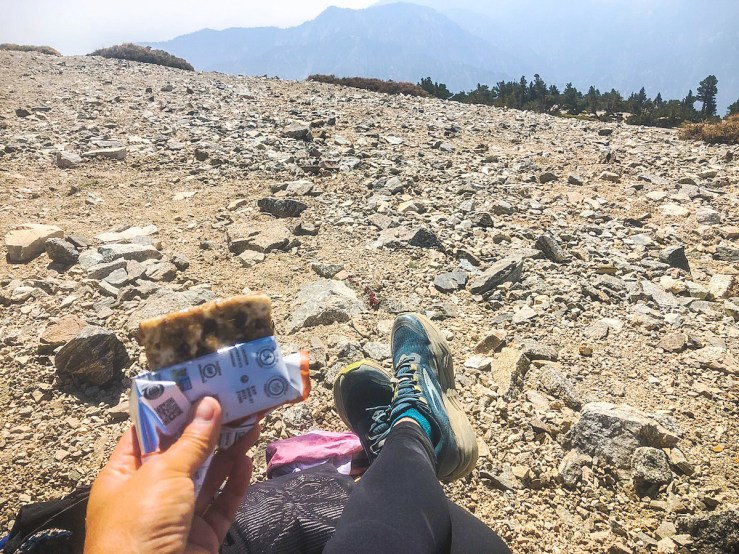
You can find tons of plant based backpacking food options, from Backpacker’s Pantry, which was my go-to source for backpacker meals, when I was a vegan for 3 years. Today my eating patterns could be described as opportunist or omnivore. I still eat plant based meals much of the time, but not all the time. I leaned toward ProBars a lot, as a vegan, since it is a meal in a bar. But they do have a small amount of sugar in them, which I like to avoid. I still enjoy these bars for big hikes, and backpacking trips. Protein bars can be packed with calories and usually lots of sugar. When you’re hiking, a small amount of sugar is not a dealbreaker. Protein bars usually have a good balance of vitamins, and require no cooking, so I always bring a few backpacking.
With No Grocery in Sight
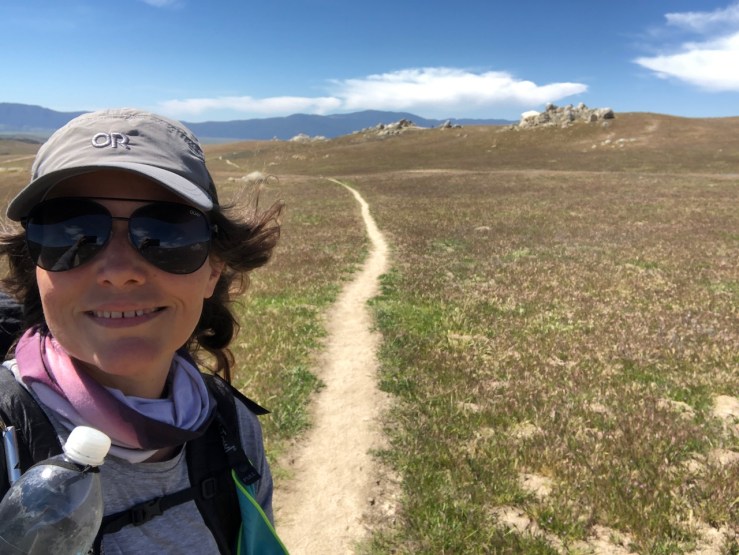
I have met so many interesting people on my thru hikes, such on my PCT journey along Section A from Campo at the southern border, all the way to Warner Springs. Everyone seemed to have their own plan for eating right, who I spoke with. When I hiked the High Sierra Trail, one couple I met was eating very low calorie, and rationing their food. So whatever you do, I recommend bringing an extra day’s worth of food, which adds about 2-3 lbs of weight. The last thing you want in a place like the Sierra, with no grocery stores in sight, is to run out of food, in the middle of nowhere, where no one is coming to save you.
Plan Your Re-Supplies Carefully
Some thru hikers will plan their resupplies very carefully, accounting for every stop along the way. If you’re hiking the entire 2,650 miles from Mexico to Canada on the PCT, this is no small feat. Just planning a 7 day stretch in the wilderness is tough, let alone planning successive town stops every 3-7 days. You need to know how fast you hike, or want to hike, along with predicting what you might want to eat, weeks or even months from now.
Save Time and Money on Food
Backpackers plan re-supplies to save miles, hiking to a grocery store. But it not only saves time, but money if you are a planner, buy your food in bulk, at places such as Costco, or large cans of dehydrated meals from places like Mountain House. Some people will bake their own granola, dehydrate veggies on sale, vacuum seal them. That is a ton of work, and I am not sure it is necessarily worth the time and effort, if you can afford to do otherwise. But if you are trying to limit your ingredients, or have allergies, this is sometimes the best option. I make plenty of my own hiking snacks, such as date and oat balls, trail mix, and protein bars. Cheap, organic, or expensive, just know what you’re getting. Don’t assume something is healthy. Just read the nutrition facts on the label.
If Sugar is Your Weakness…
Breakfast is not set in stone. Everything I eat in a day is flexible, except for my morning cup of joe. I must have my cup of black coffee first thing. I do something slightly unhealthy on the trail through. I buy instant coffee packets from Trader Joes with cream and sugar mixed in. This is the one time in life I do cream and sugar in my coffee. In life it would be Oat Milk with Erythritol as a sweetener, or maple syrup. The only other sugar I typically consume hiking is a handful of Ricola cough drops, or some fruit flavored energy chews (also made by ProBar). So I will partake in a small miniscule amount of that popular drug affectionately called sugar on trail, but I keep it to a minimum.

Eat What You Like
So if you are planning to thru-hike you will likely choose easy meals with adequate protein, carbs, and fiber, to correspond with your daily caloric intake. But it’s not rocket science. Don’t overthink it. If you love a food in life, it will be familiar, and loved on trail. You can always fill in the gaps, by adding variety with the food you eat when in town, that you missed on the trail.
Consult the Experts
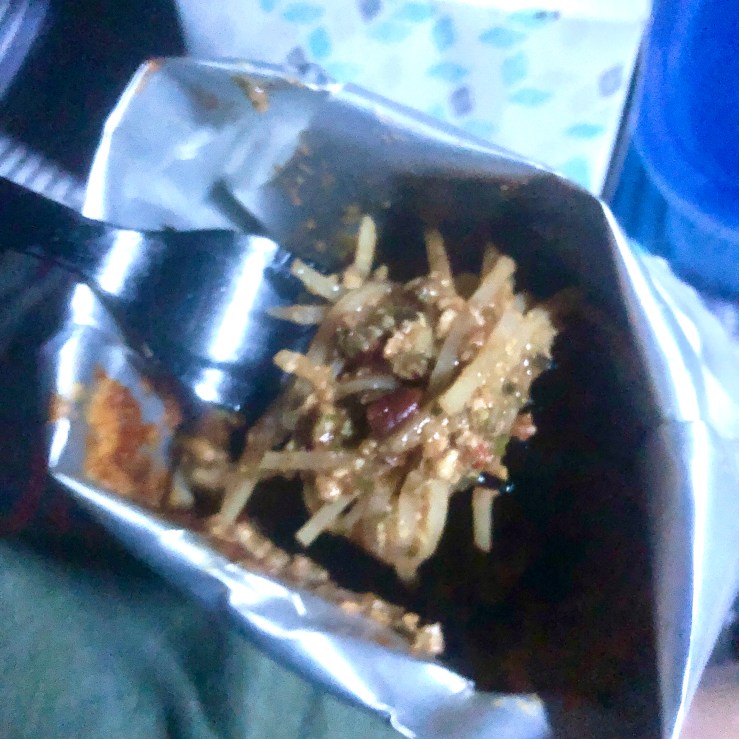
You may want to read an entire book on the topic, such as Dr. Brenda L. Braaten’s “Pack Light, Eat Right” which recommends trying out new combinations of food. Though I do think this is a novel idea, and a way to keep some variety in your food choices, I don’t use this approach myself. One thing I do is combine food more deliberately. For instance I really like powdered eggs, mixed in with otherwise vegan, or vegetarian backpacker entrees. I found eggs, went perfectly with the Cuban Rice and Beans I brought on the PCT, from Backpackers Pantry. So I experimented a bit on my own. I lean towards flavor combos I already know I will like, and don’t use my backpacking trip to try new flavor combos I am not sure will taste good to me. Generally I play it safe, and eat what I enjoy in my everyday life.
Scheduled Meals?
When I am hiking a long trail I don’t have a set schedule of eating, but I do try to keep the carbs and snacks steadily flowing throughout the day. At the beginning of the day, I get my snack bag ready, with the day’s food, and place it in an easily accessible outside pocket of my pack. I don’t eat every one to two hours on any type of schedule or count calories. On the High Sierra Trail, I ate oatmeal or a bar for breakfast, about 3 bars throughout the day, a bag of dried fruit, several pieces of jerky, some crackers, and one large meal at the end of the day. I usually ended my day with a cup of Turmeric Ginger Tea, which is helpful for combating inflammation.
One Right Way or Wrong Way to Eat
They say there is no one right way to eat. Everything I ate on my hike through the Sierra, and what I ate when I hiked Section A of the PCT, was all from Trader Joes, or Sprouts Farmers Market. Not only was most of it organic, and lacking preservatives, it was cheap. Now I understand some places don’t have these stores, and one must adapt. I also order a lot from Vitacost, for finding gluten free staples, like pasta, crackers, and rice noodles, which are not always available. If I had to go into a typical grocery store, you can usually find something like Minute Rice, or Near East dried rice pilaf, in a pinch. Most groceries have dried fruit, and nuts. There is no need to spend on expensive backpacking meals, if you cannot afford them.
Keep it Simple and Nutritious
When I am planning what to buy at the store, if I am buying something in a box, I always pay close attention to the ingredients list. They say foods with shorter ingredient lists are better, and I find this to be true. Take Larabar for example, with its healthy combination of protein, carbs, and good fats. When I was vegan I consumed mass quantities of these on trail, and I still do today. Keeping it simple with ingredients gives your body less of a workout too, figuring out what to do with it all. Mono meals are easier for a body to digest, so I try to keep my meals to five ingredients or less.

“Ram-Bomb’s”
I’m not in the ramen bomb crowd. This is basically instant ramen mixed with something like mashed potatoes with all sorts of add-ins thrown in, such as cheddar cheese, sriracha hot sauce, and cheetos. I appreciate lightweight, and packable options, such as ramen in theory. But as a gluten free person who cares about health, I stray away from these concoctions. I have created a version of a ramen bomb before with rice noodles, and enjoyed that one, while I was hiking the Trans Catalina Trail (TCT).
Power Your Brain
Thru-hiking is a combination of physical, mental, and nutritional challenges. You need good fuel, or it’s not going to work, since our physical bodies are directly affected by our mental state, which is in turn governed by the nutrient balance in our brains. It is like a dance, and unless you want to waltz with death, miles from civilization, you have to take care in planning your several day long backpacking trip meals, and thru hiking re-supplies seriously.
I Don’t Calorie Count
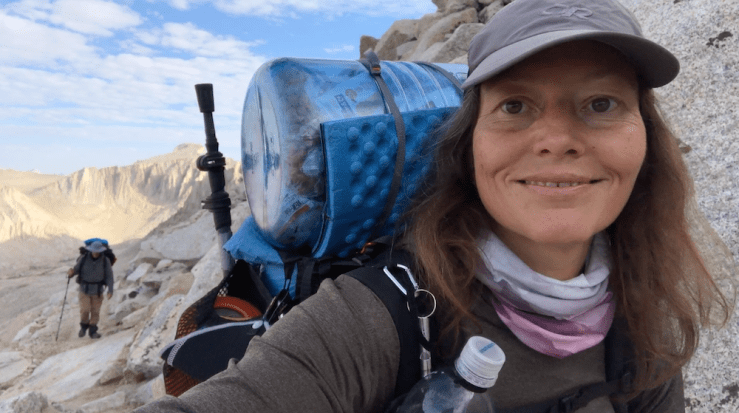
What matters for me, is to start my day in a way that gives me motivation. That usually includes coffee. Eating on trail is a very freeing mindset, because there is no calorie counting. If you want to chow down on a jar of peanut butter all day, you can, if that works for you. You will eat more intuitively than you may do in life. You don’t eat because it’s dinner time, but because you are hungry. Your dinner coincides with a reward for setting up the tent, and being at camp. It is a celebration of the miles you hiked, and a time for rest, along with reflection.
More Carbs Please
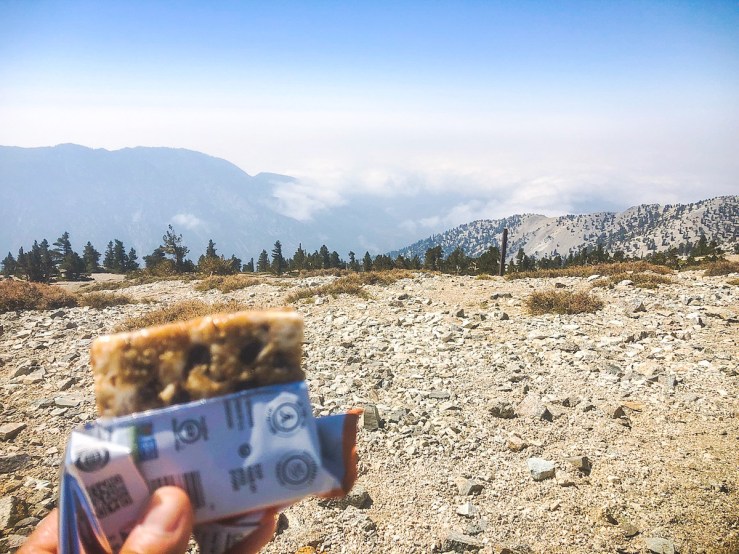
I like to stick with foods which will fuel my adventures from the very beginning, all the way to the very end, at the terminus. For me this is mostly carbs, with some protein thrown in for recovery, and plenty of foods with fiber. I love my fruit, and I love my Ricola cough drops. Everyone has their quirks, and that stretches into what we eat on a daily basis. So, I don’t normally chow down on sugary cough drops in my daily life, because I don’t want cavities. But I do carry most of what I enjoy in my everyday life, into my backpacker meal planning. So far I hiked several long trails, and I am excited to hike even more of them in the future.
Some Fail to Plan But Nobody Plans to Fail
Thru-hiking and backpacking are serious endeavors, which need lots of planning. I recommend shopping around, and planning as early as possible, so you have the most options for fueling your journey. The great news is backpacking food is readily available, and new brands popup everyday. I see a trend toward lighter, less bulky packaging too. That means no more having to empty your meals into zip locs to save weight.
Dealing with Health Struggles While Backpacking
I was a vegetarian for over 15 years and in turn faced some nutritional challenges as a result. I ended up developing an auto-immune disorder, and after that time, had to re-think how I ate. I soon realized I was gluten intolerant, and lactose intolerant. So I had to work within these constraints in choosing my backpacking meals. Going vegan for three years helped me clear all the gunk out of my body. It helped with some of my autoimmune concerns, along with curing my arthritis, and my psoriasis. The one thing it did not help me with was my thyroid function, which worsened somehow, despite all my vitamin intake, and attempts to eat enough protein. So I take my nutrition seriously today, and stick with eating whole foods, which continues when I am out on trail.
Is There One Best Diet for Everyone?
Most experts will say that a whole foods diet, with a balance of fruits, vegetables, grains, protein, and healthy fats is great for everyone. That is not always the case, since food allergies, and other diseases can call for a need for a different approach (Ex. Keto). I personally eat in a balanced way, while on and off trail, enjoying mostly fruits and vegetables as the bulk of my diet. I love plant foods, but I am not solely plant based. I don’t go to extremes anymore in my diet or my lifestyle.
No Perfect Food
I stick with whole foods to fuel my adventures. I don’t eat fake meats or processed foods very often. I try to eat unadulterated things as much as possible. This has freed me from the mental prison of having an obsession with what I eat in a day, and label reading. I know it’s not my job to judge myself or others based on diet, because in the eyes of God, what we eat in a day holds no weight. Animals die in agriculture, due to urban sprawl, and end up as roadkill. There is no perfect, 100% ethical way to live where no animals are harmed. It was enlightening when I found this out. There is no perfect veganism, and being vegan, does not make you a better version of human. We are all imperfect and always will be since we are human. All we can do is our best today. So that is what I choose to do, and keep on hiking.
Why Backpack and Thru Hike?
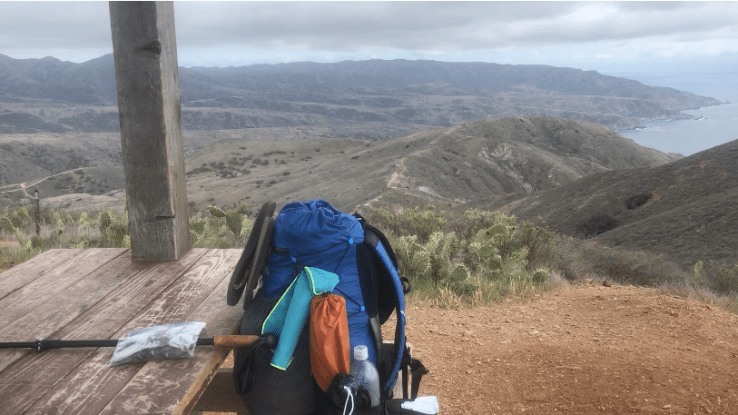
For some, there may be questions, about why one would leave the comforts of their warm bed, to embrace the rugged, unforgiving terrain of the wilderness. Sleeping on the cold hard group, with less than an inch of padding, not being able to turn on the tap to make your morning coffee with the push of a button, and the potential to interact with potentially dangerous weather, without the benefit of a walled structure, are all factors that come to mind. For me the benefits outweigh the risks. The experience itself, outweighs the lack of creature comforts.
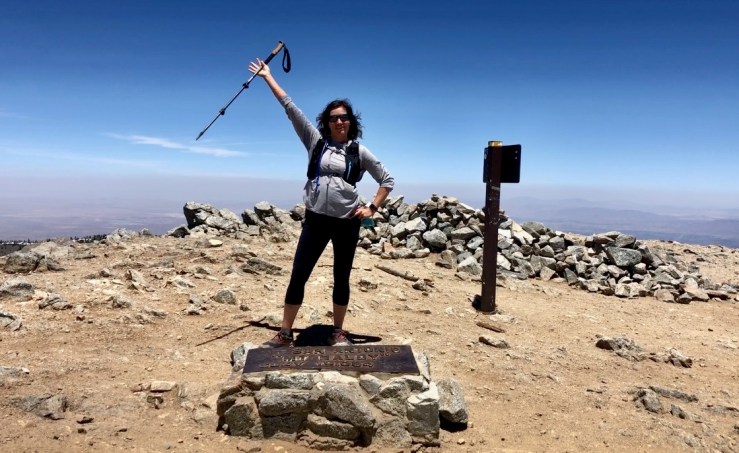
Challenge Yourself
There is just something about challenging yourself in whatever it is you do in life. That applies to hiking, backpacking, trail-running, and whatever type of endurance sport you participate in. According to runner and triathlete Sandi Wiebe, “That feeling of setting a personal challenge and meeting it? It’s still there, and it’s just as satisfying.” She placed number one in her division at 73 years old, at the 2000 Kona Ironman Competition. People like this are a true inspiration to me. Keep doing what you do, while you still can. That has become my motto in life.
I hope this guide helps you plan your thru hiking adventures a bit better, and know what to expect as far as meal planning is concerned. Feel free to comment below here, or on instagram, if you have further questions about trip planning and backpacker food.
Leave No Trace
Just be sure to come prepared and follow Leave No Trace principles to keep the wilderness pristine for future hikers.
Like and Subscribe to my Channel!
I hope you enjoyed reading this, and it is helpful in knowing what to expect, should you decide to visit here.
About me
I’m Serafina! I’m a writer and California girl who loves to go exploring. Hope you will get outside today, breathe some fresh air, and be happy!
Follow my Journey…
Be sure to Like and Subscribe to My Youtube Channel where I post videos!
Disclaimer: The work on this blog is my opinion and my opinion alone and I am not responsible for the outcome if someone were to apply these thoughts to their own life. All text and photography copyright 2023 by Serafina, all rights reserved. Information and opinions provided are kept current to the best of the author’s ability. All readers’ usage of the ideas and opinions presented in the blog, are at their own risk. Be aware of the possible dangers of hiking, surfing, walking, cooking, and other activities, which may take place indoors or outdoors. By reading this, you agree not to hold the author or publisher of the content on this web site responsible for any injuries or inconveniences that may result from reading the blog, or partaking in any activity mentioned in the blog. Read the blog, and use its ideas, if you so desire, at your own risk.

 Serafina Hikes