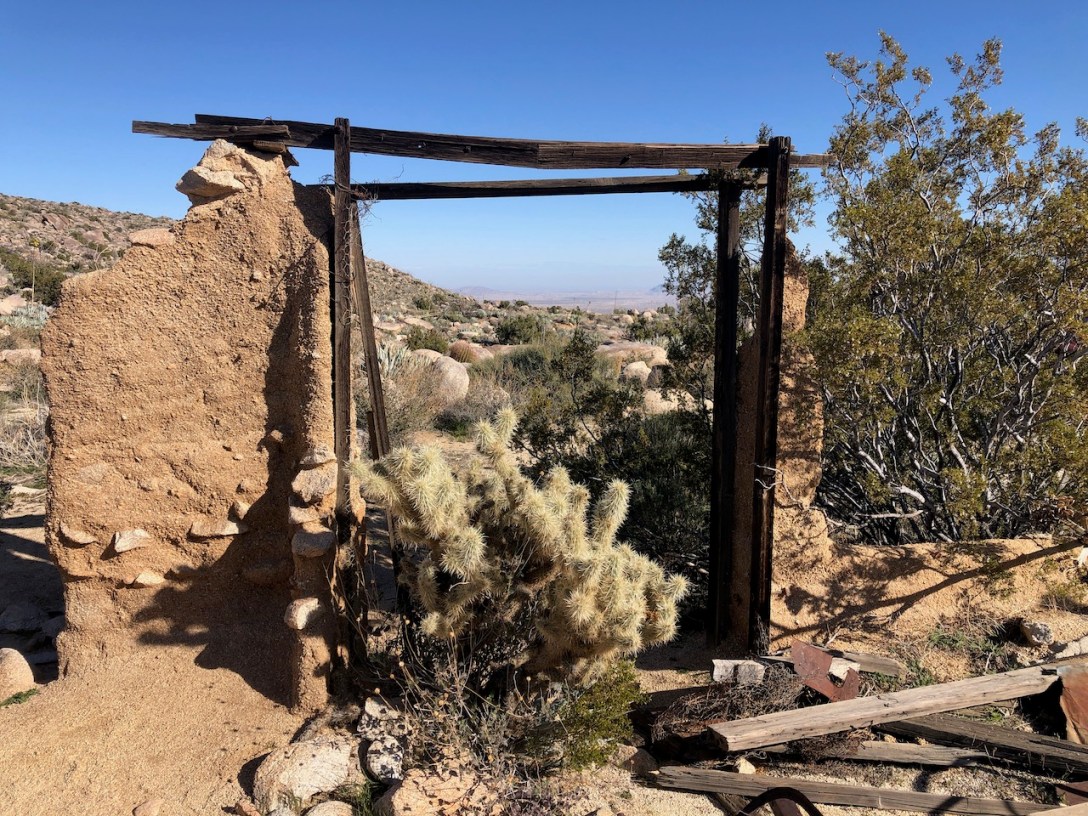
I drove out to the Blair Valley in early February in search of an old homestead I heard about in Anza Borrego State Park. It was located in the southern section of the park.
The relatively isolated Blair Valley of Anza Borrego State State Park, is where you can find the homestead of Marshall South, down a winding unpaved road, where you pass several camping areas.

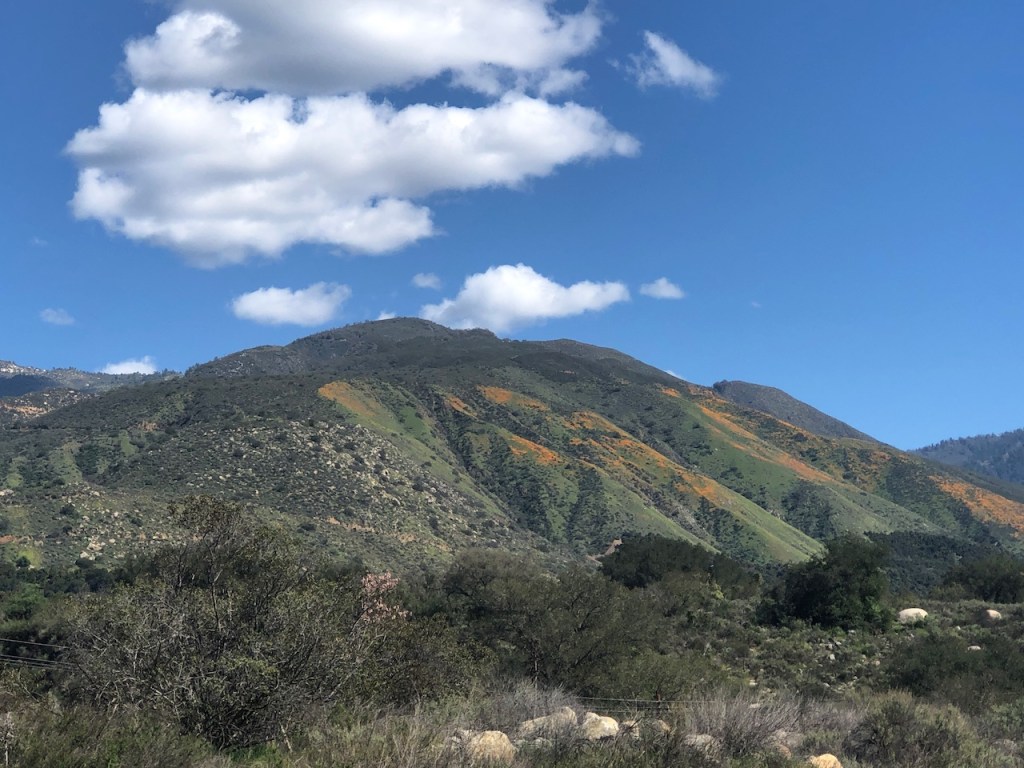
On the drive into the desert valley, I passed through the a valley filled with poppies on the mountainsides.
I arrived at the Blair Valley, and followed the signs onto an unpaved road.
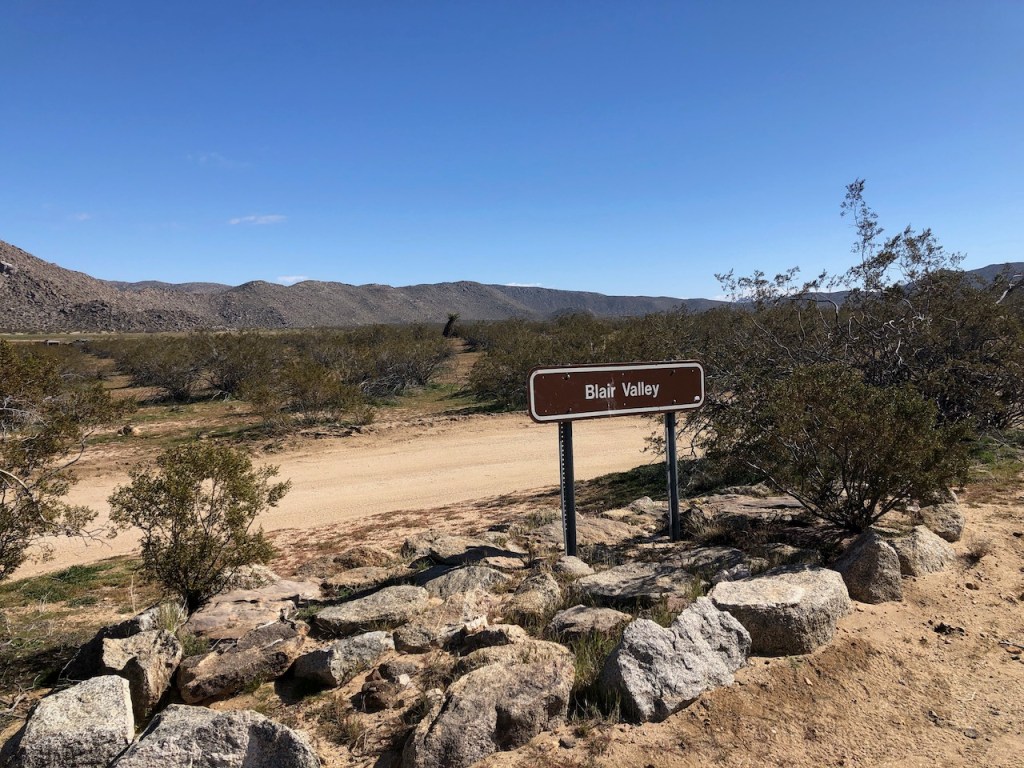
I stayed to the right here, and continued on towards the trailhead.

There was a parking area and a sign, with all the listed trails in the area.
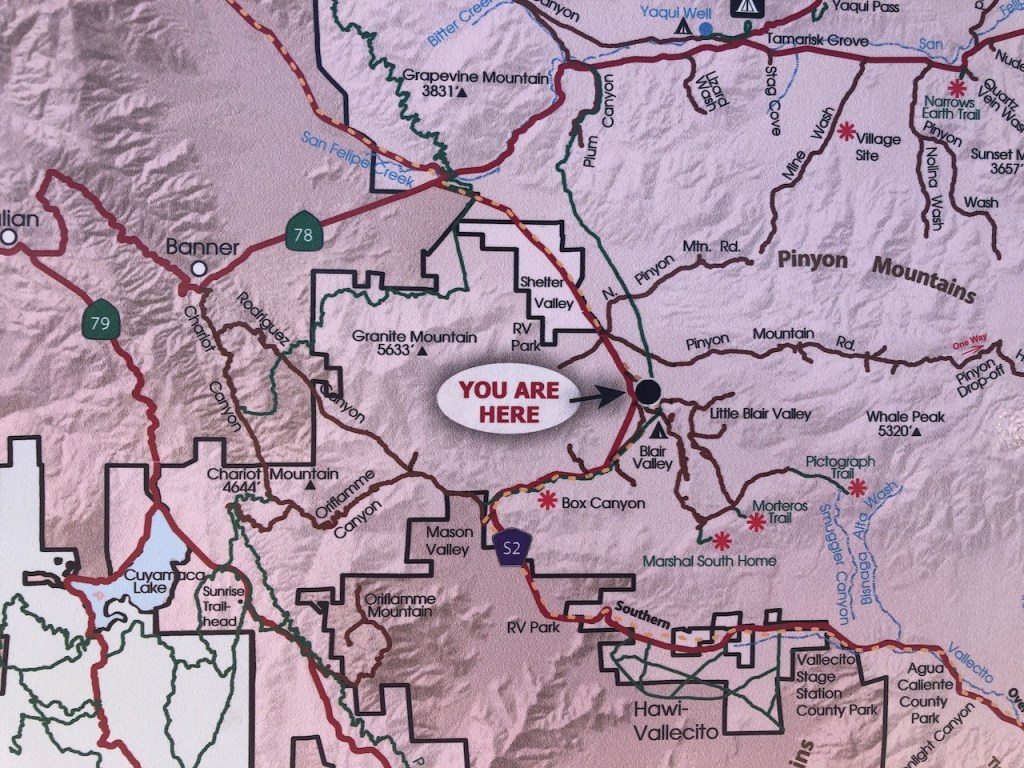
Blair Valley is near Shelter Valley, population 320. It sits at 2320 in elevation.
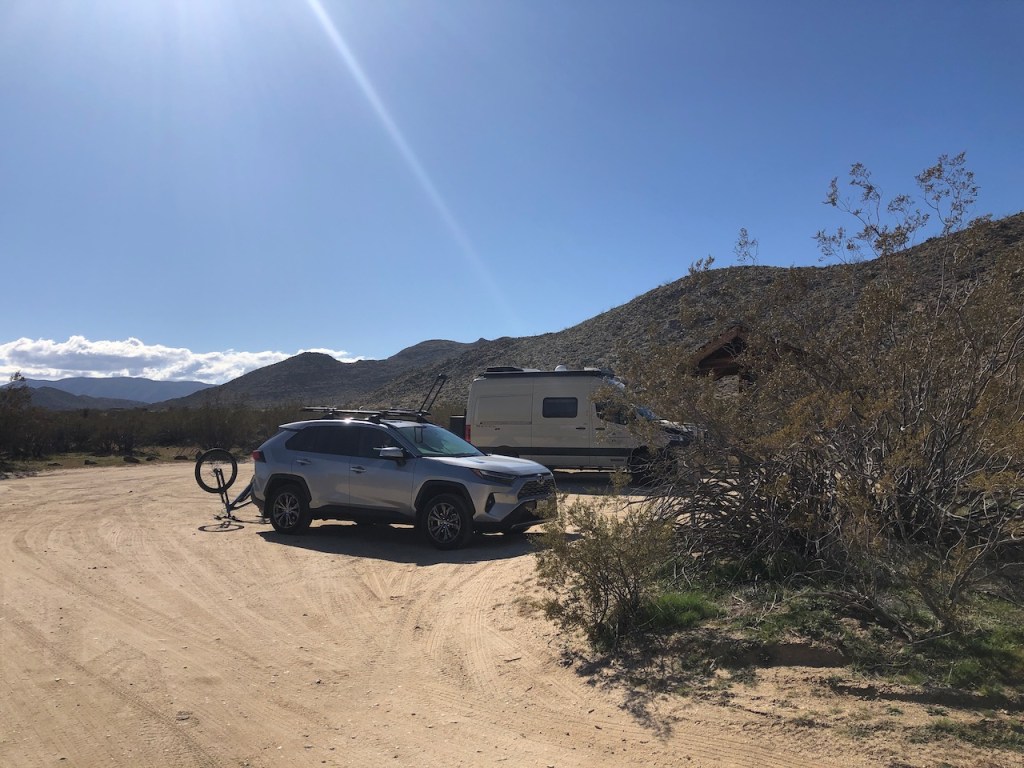
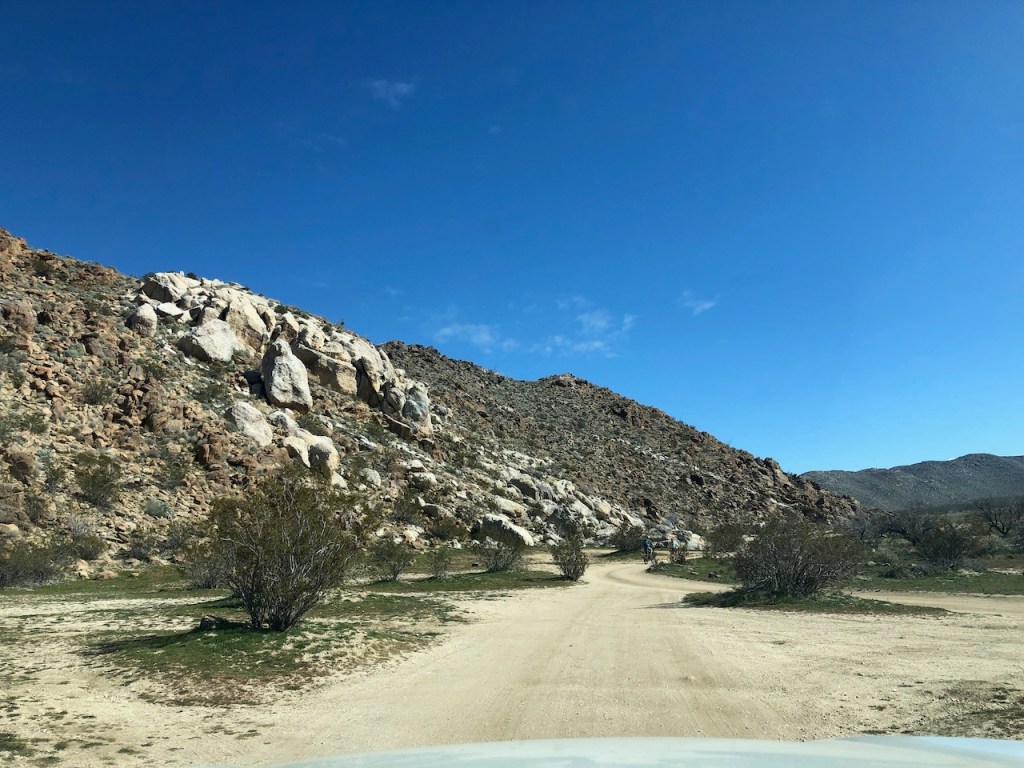
I would be driving on an unpaved sandy road.
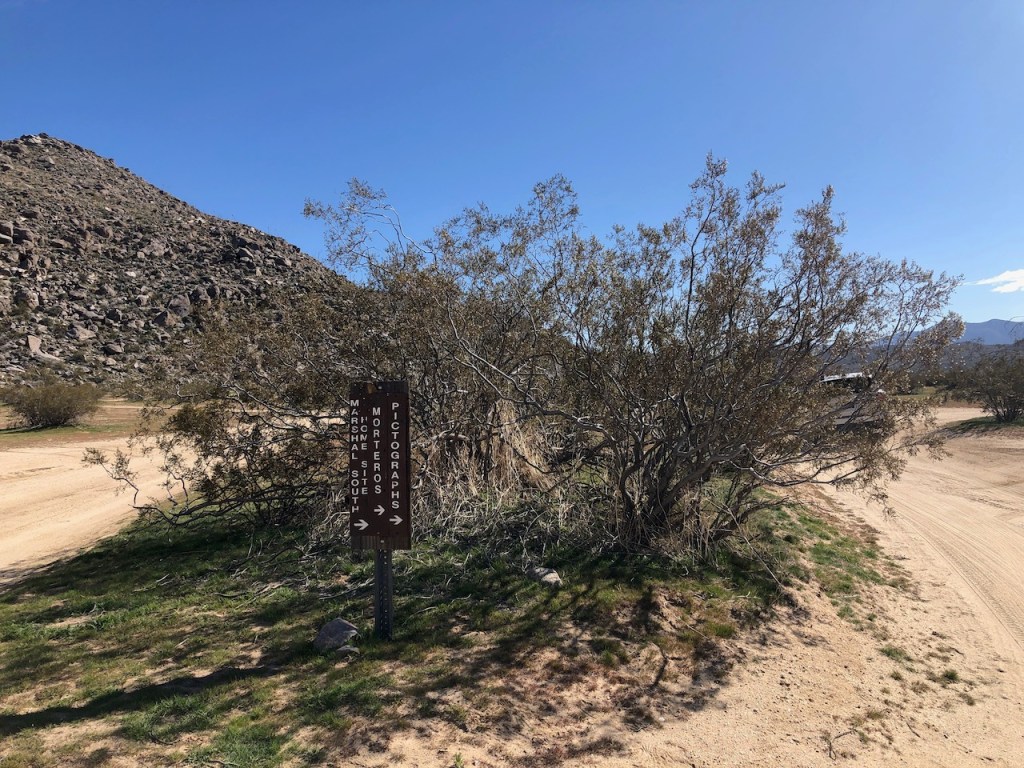
At this sign I would stay to the right. There are other trails here too, such as the Pictograph Trail, and Morteros Trail.
The desert was very green due to an abundance of rain.

At this sign I would stay to the right again, towards Marshal Souths home.

I arrived at a small parking area, with room for about 6 vehicles.
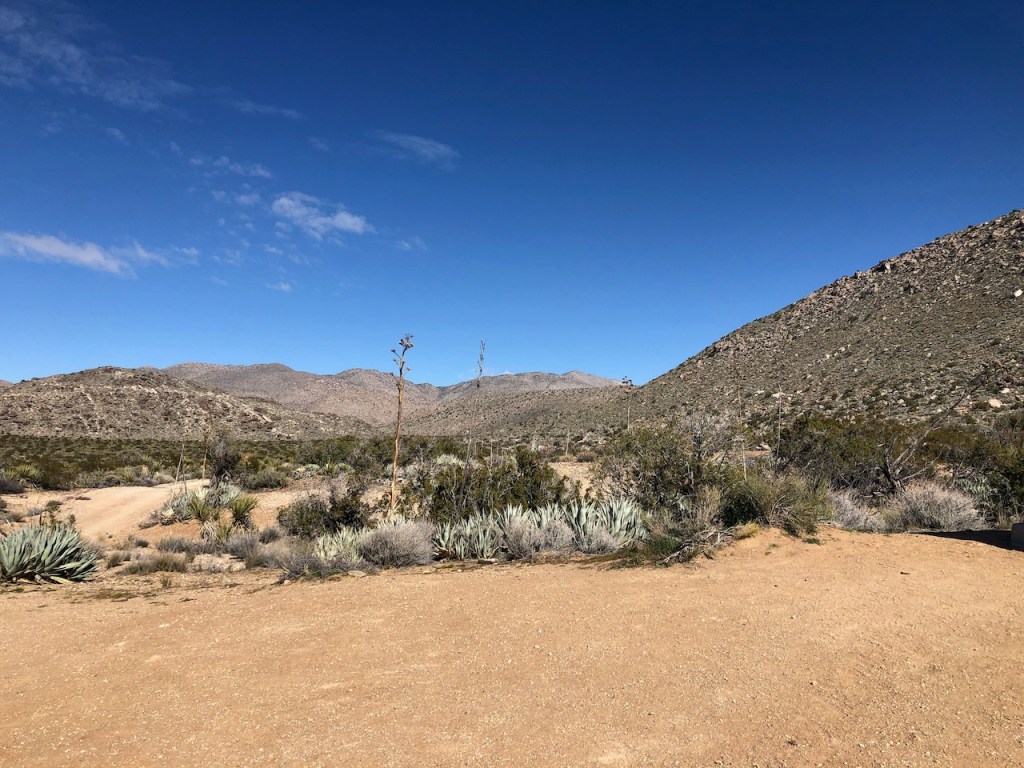
Looking upward I could see Ghost Mountain.

This sign describes how he lived here with his family, and was referred to as a “desert dreamer.”
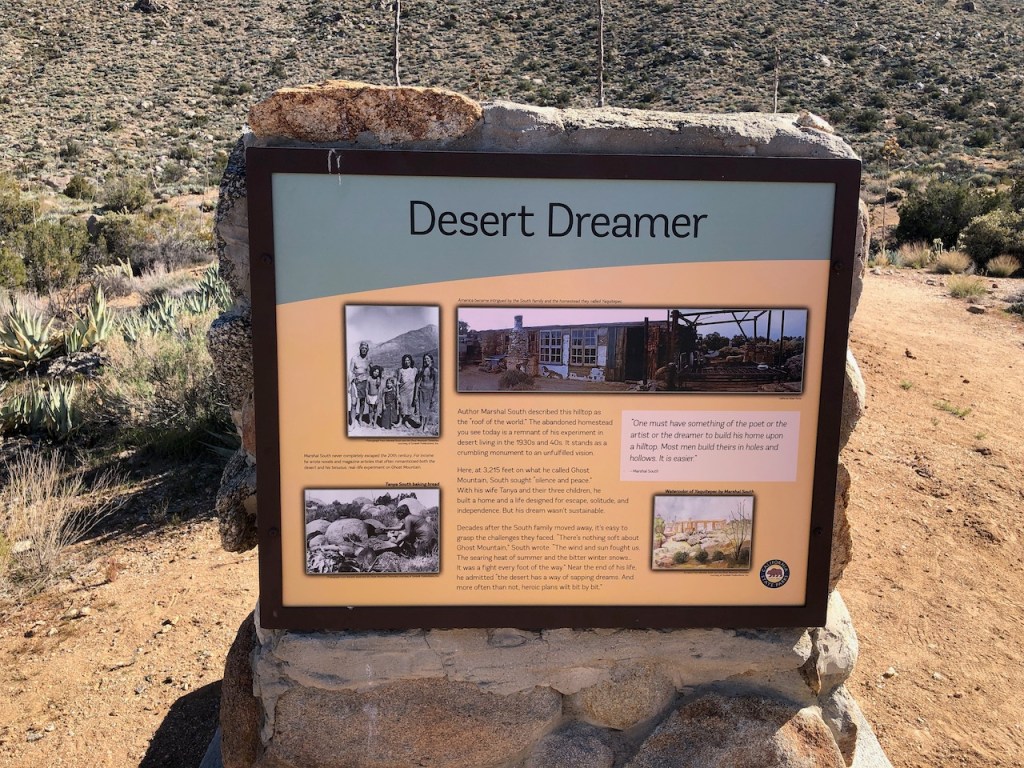
This one describes the archeological significance of the area.

This was the beginning of the trail.

This is the trailhead.
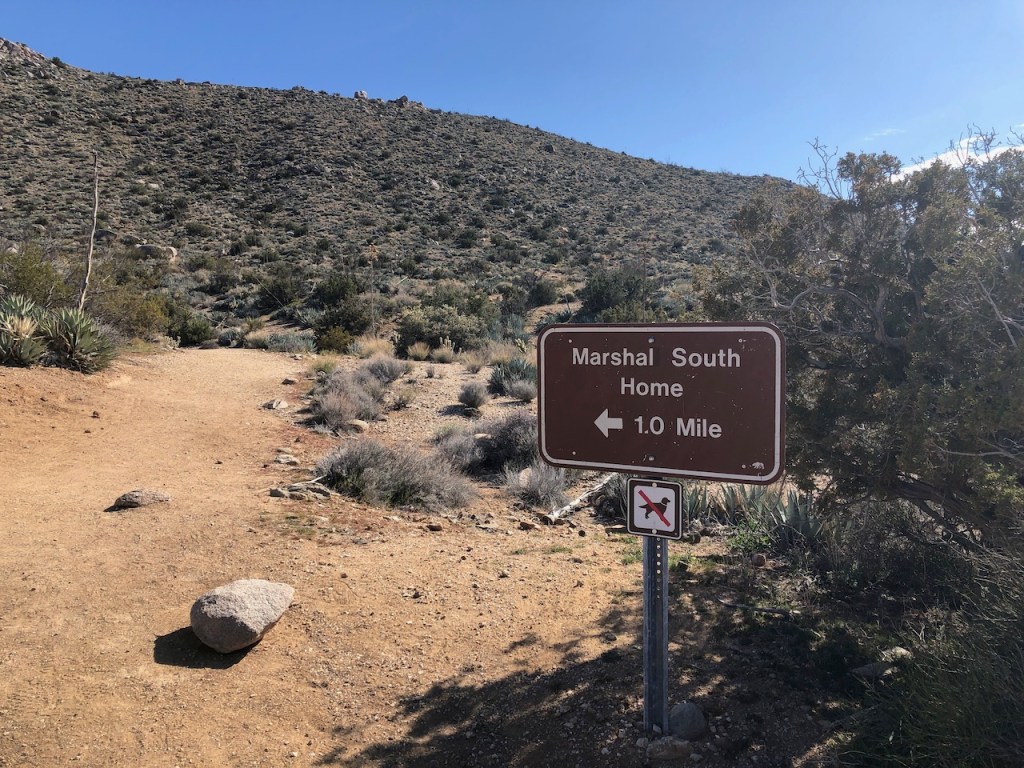
I followed the sign onto the trail.
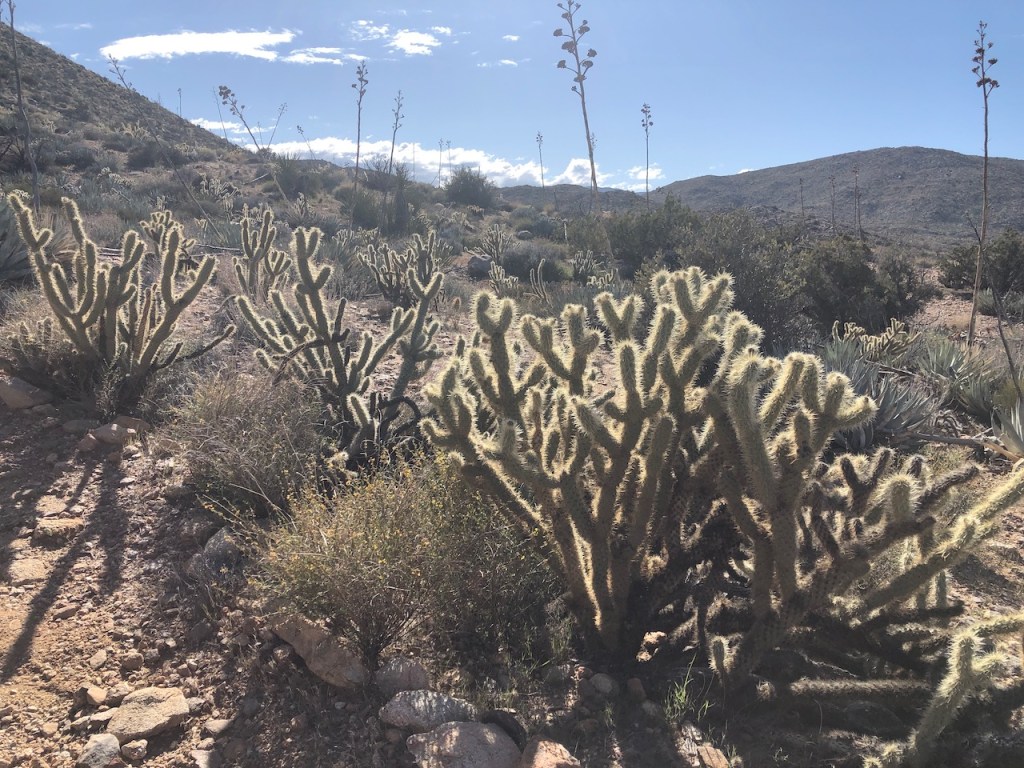
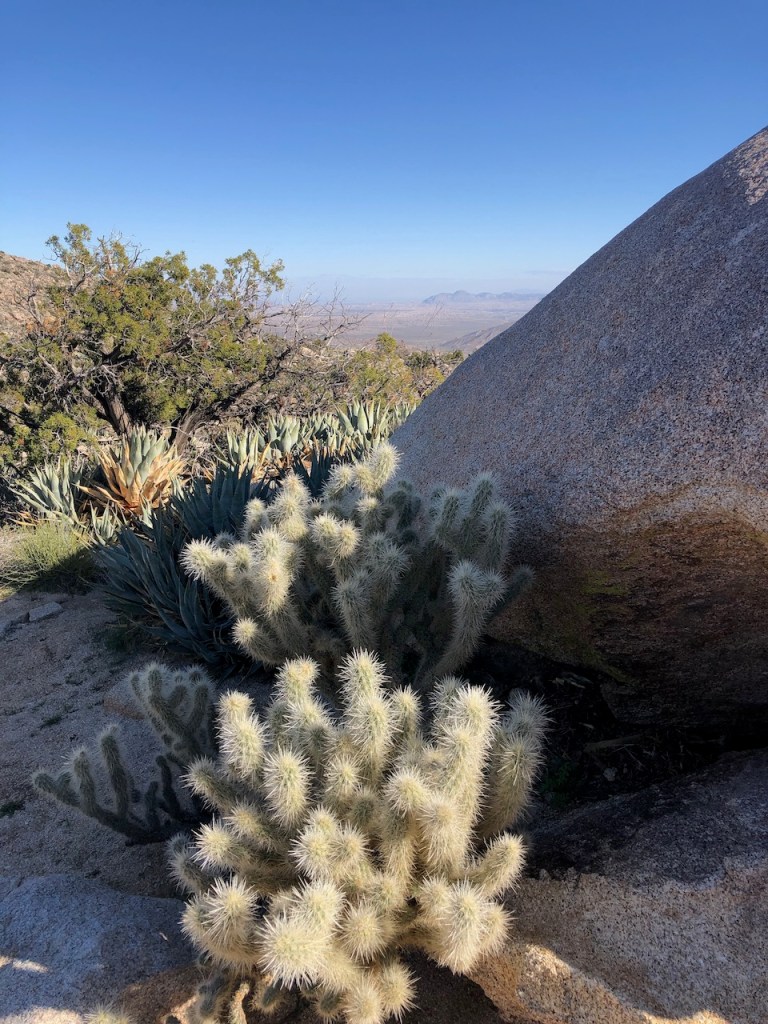
I noticed that the landscape around me was rather harsh with an abundance of creosote, cholla, and and yucca.
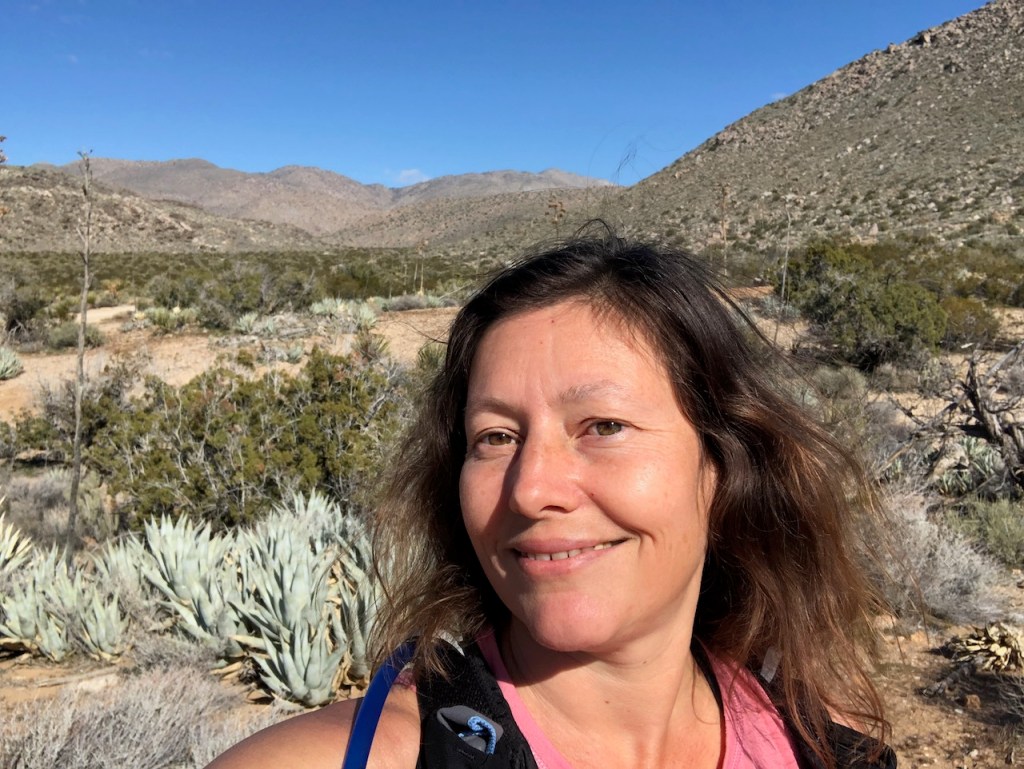
The Hike Begins
I began hiking up the trail. It would be a steep one mile hike to the ruins of his desert homestead. Little did I know that Ghost Mountain, was even more densely topped in yucca and cholla, far more than any other place I had been before.
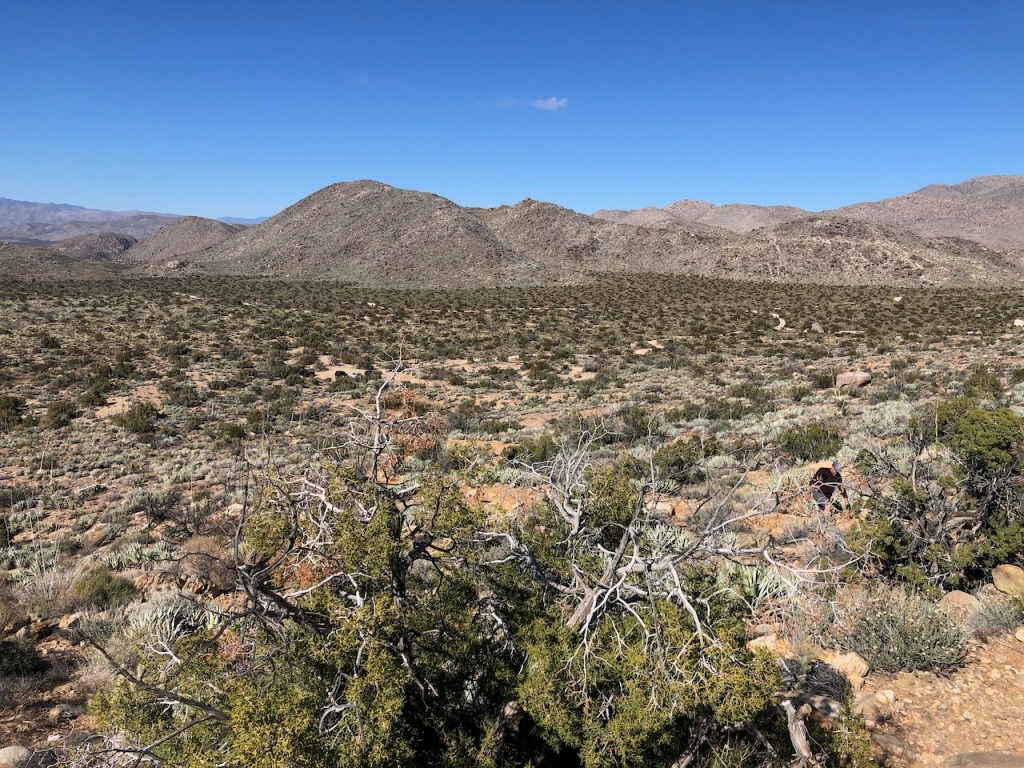
Looking back towards the valley and Whale Peak, another on my peakbagging list, but not today.
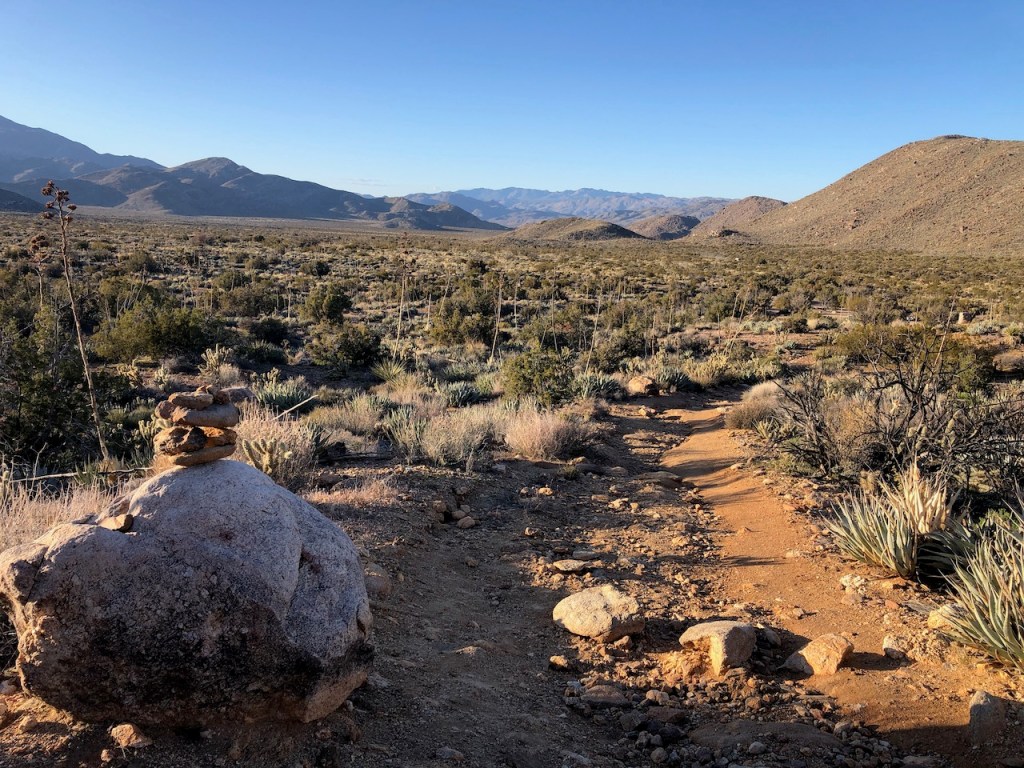
The trail was narrow and rocky. I was glad to be wearing sturdy shoes.
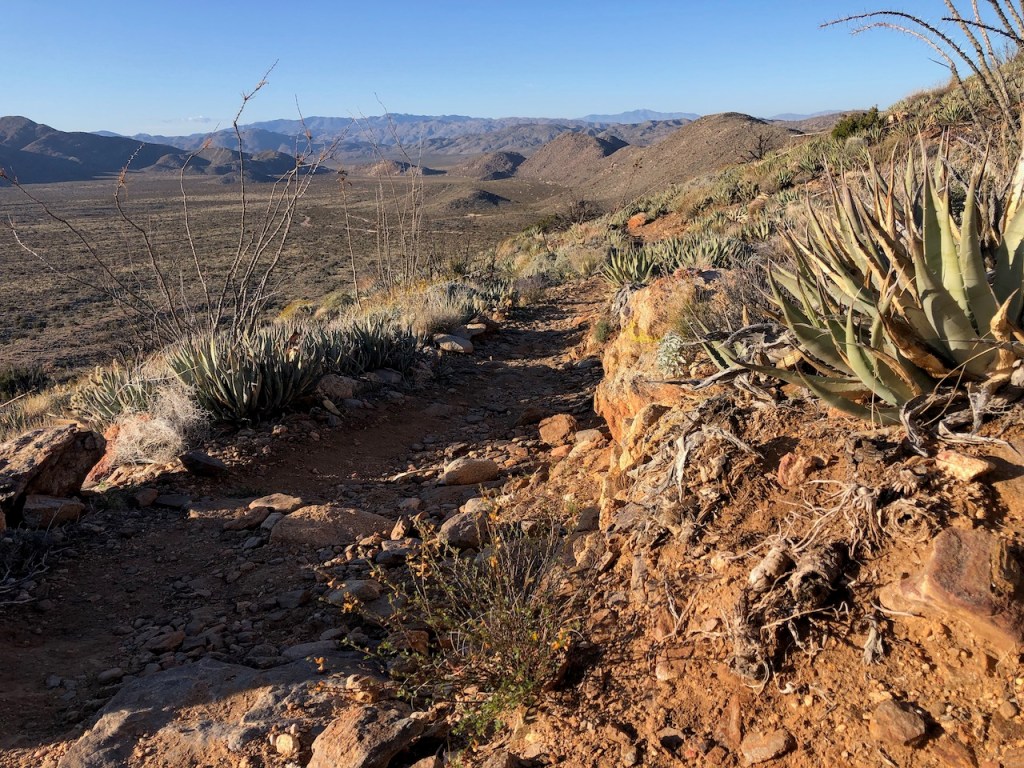
The views got better and better the higher I climbed.
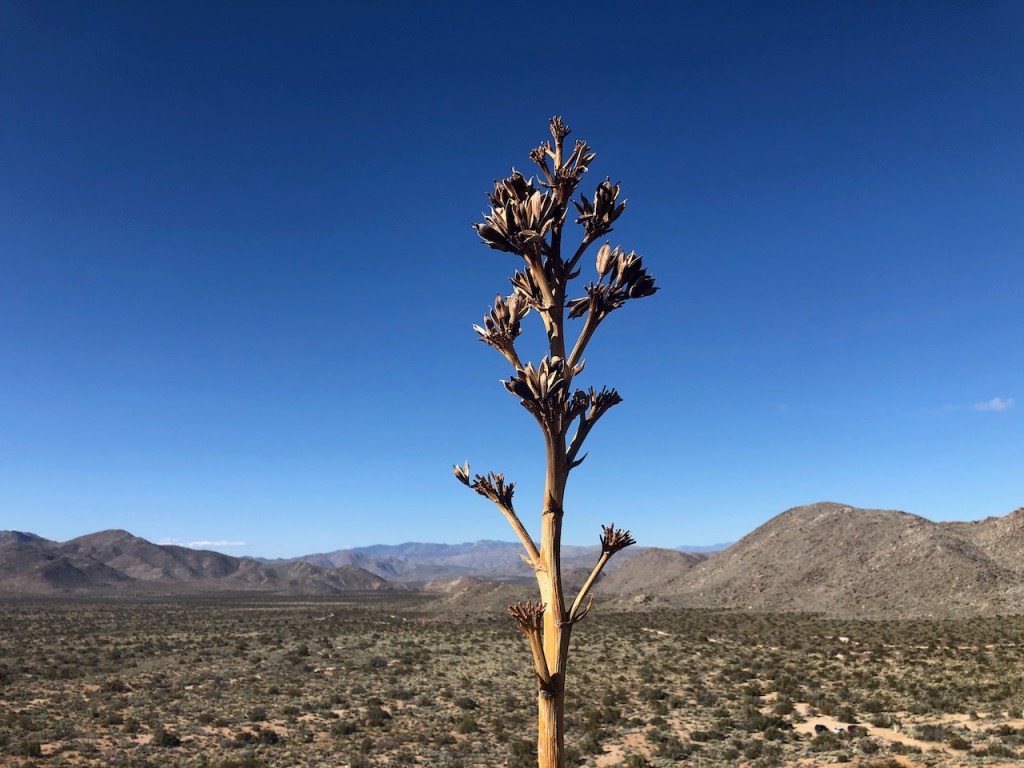
I noticed the dried up seed pods of yucca plant. They are also called century plant, since they re-seed themselves infrequently, though certainly not every century.
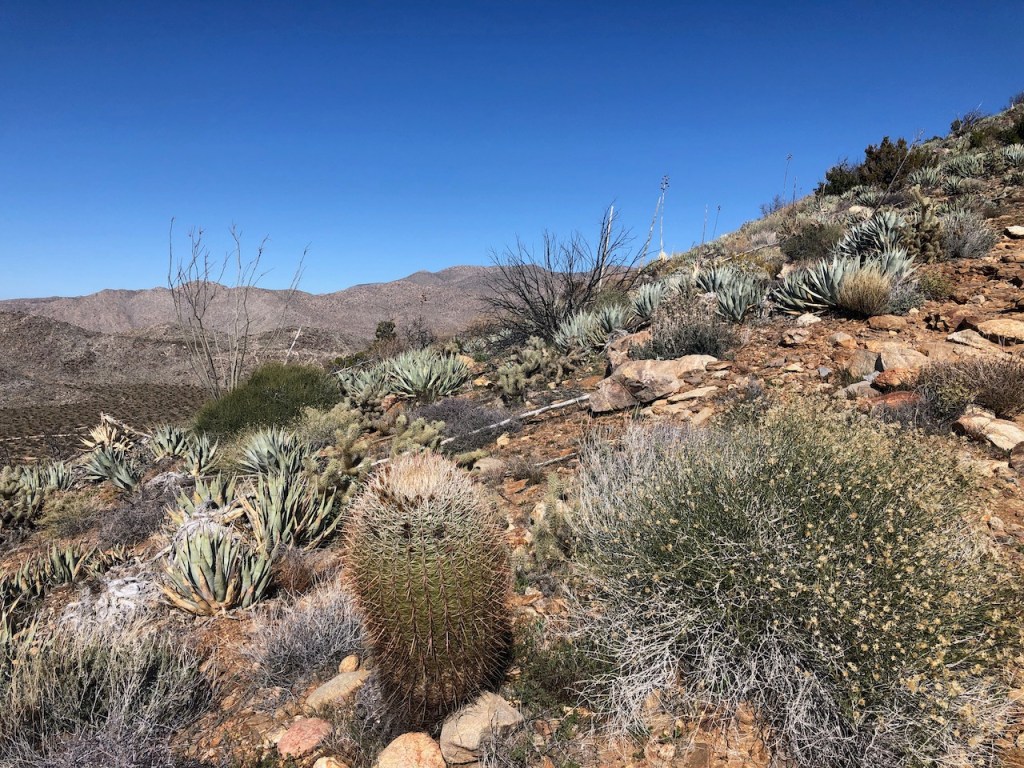
It was a beautiful cactus garden all along the way, where I spotted many barrel cactus, not quite yet in bloom.

The ocotillo looked dry as a bone, still not having received enough rain to bloom, though they likely would as spring approached.

In the distance I could see my destination, the ridge top where Yaquitepec sits.
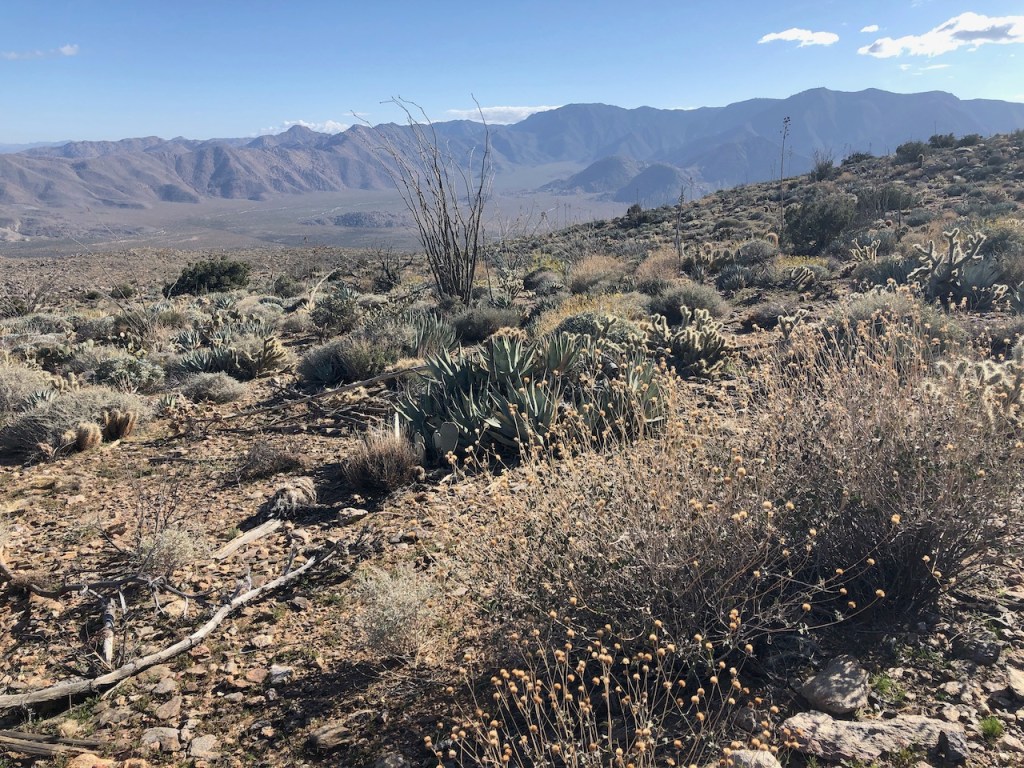
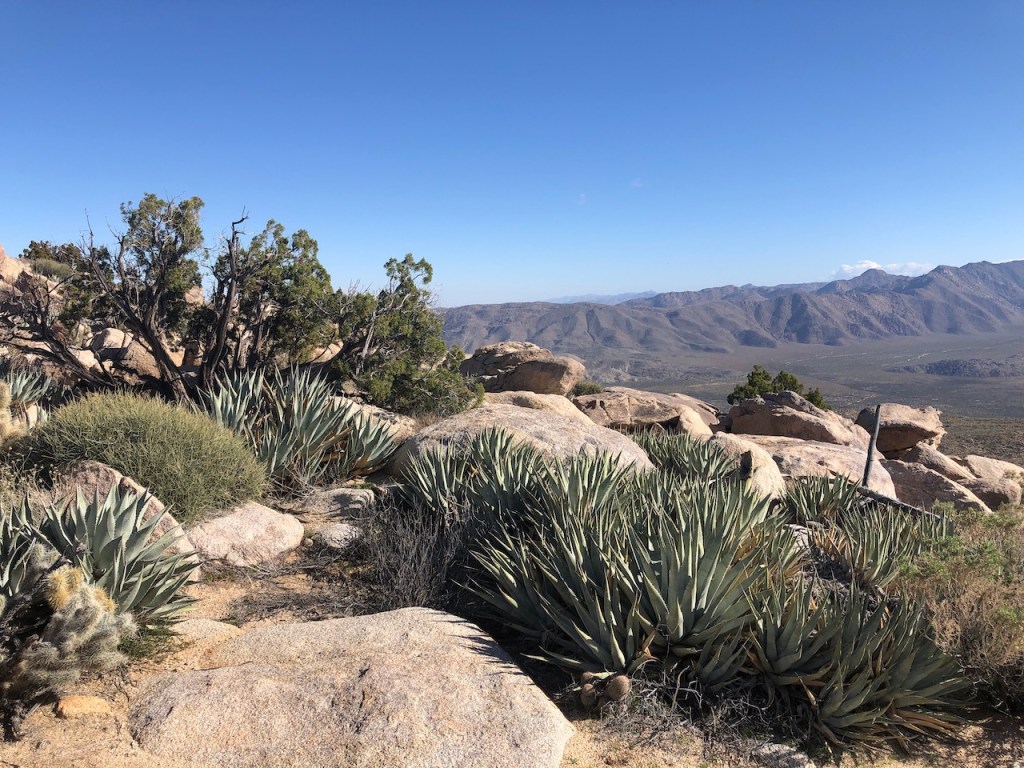
There was another valley off to the right, and the Sawtooth Mountains in the distance.
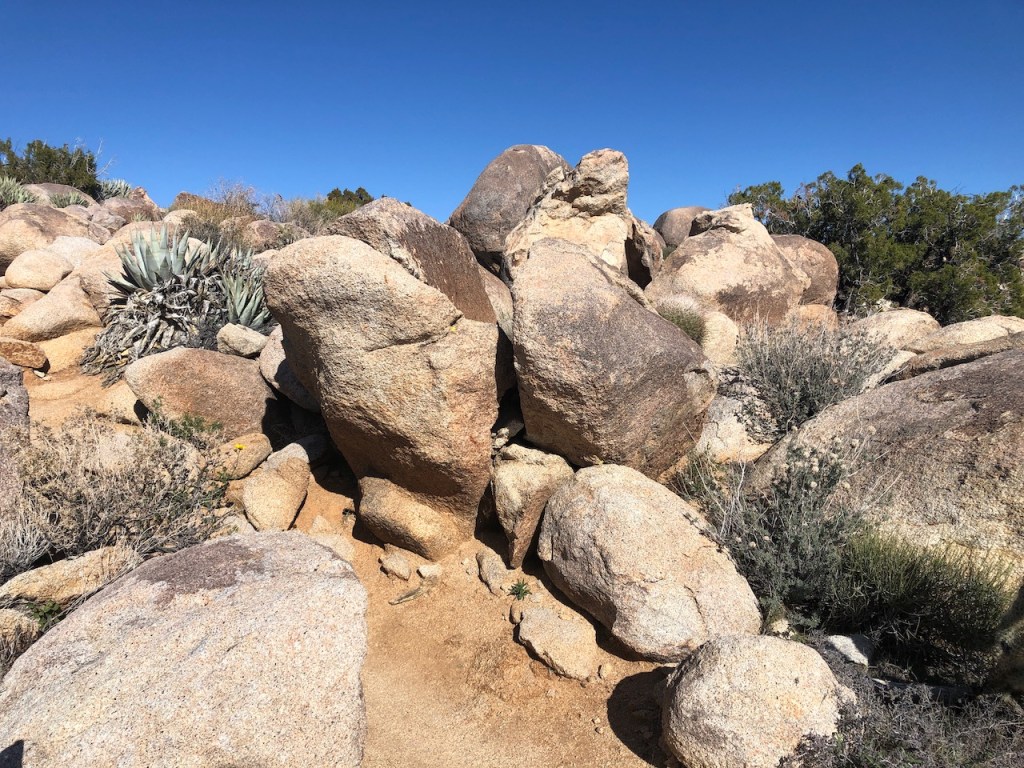
Finally I arrived on the ridge, to see the ruins of Yaquitepec, the homestead of Marshall South.
About Marshall South
Marshall South was a writer, known as the “warrior poet,” in his time. He wrote for Desert Magazine, about his remote primitive lifestyle in the desert, with his family, atop a mountain. He named it Ghost Mountain, after the thin one mile trail to his homestead to be rather ghostly.
His Early Life
He was born Roy Bennet Richards on Feb 24th 1889, in the seaside town of Glenelg, and grew up nearby on his fathers sheep ranch. After a move to the states, he took the name Marshall South while residing in Oceanside, California, working in a local mercantile. The name is presumably due to his fascination with the southwest.
A Hidden Identity
He went to great lengths to hide his true identity, and country of birth, in his time. The family themselves were equally secretive. After his divorce from his wife, she declined to discuss her former life with South. It was only decades later, that careful research pierced together his story.
A Desert Adobe Home
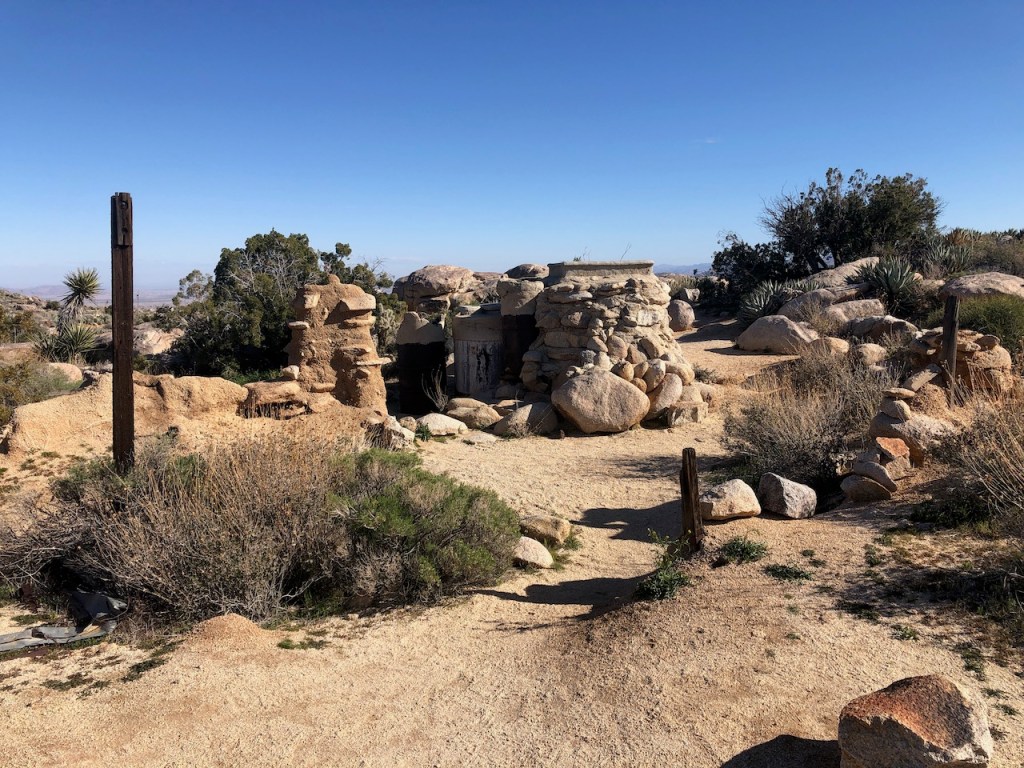
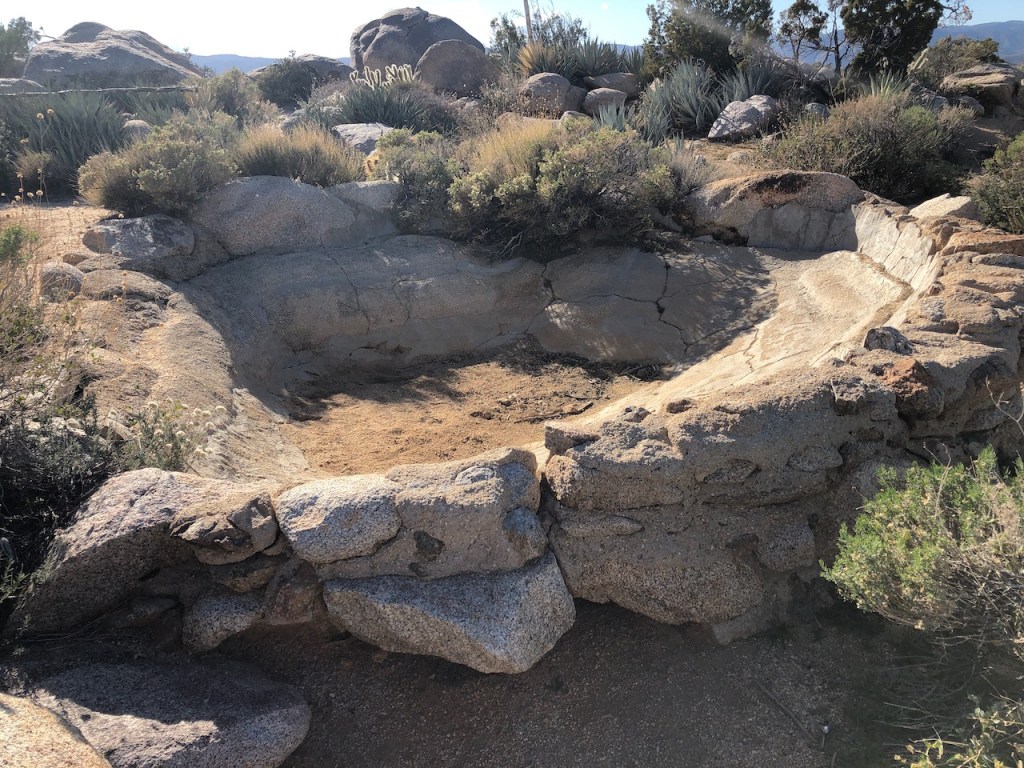
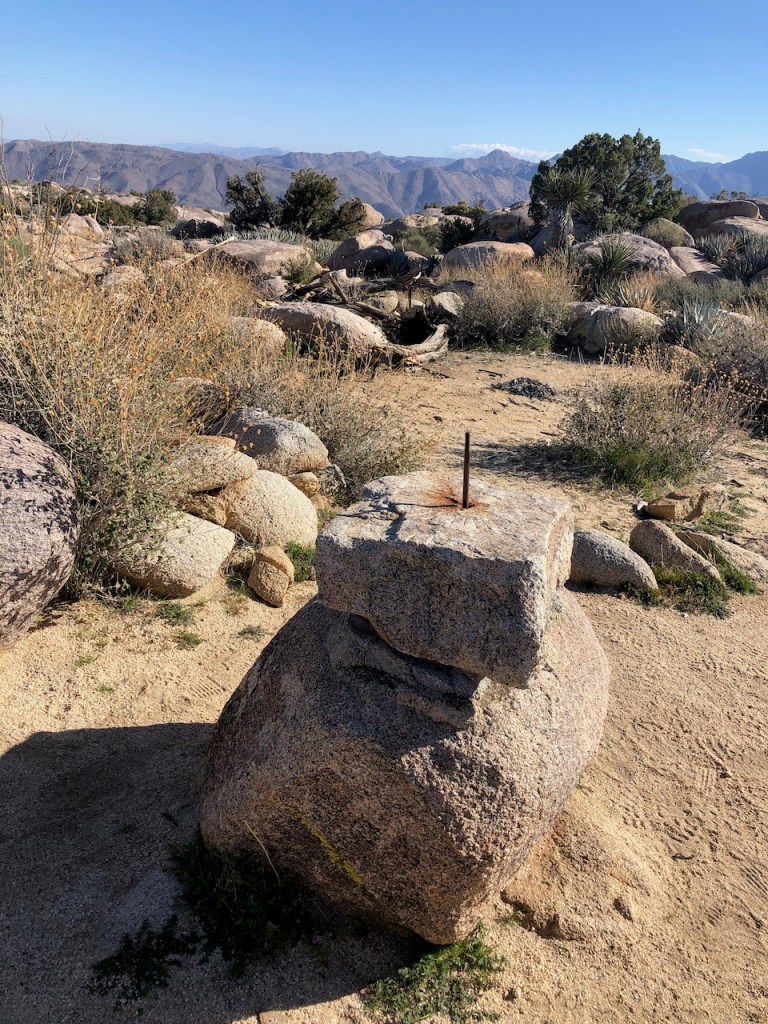
He built his adobe home complete with a cistern to collect water, corrals for animals, an outhouse, and a sundial.
Arrested Decay
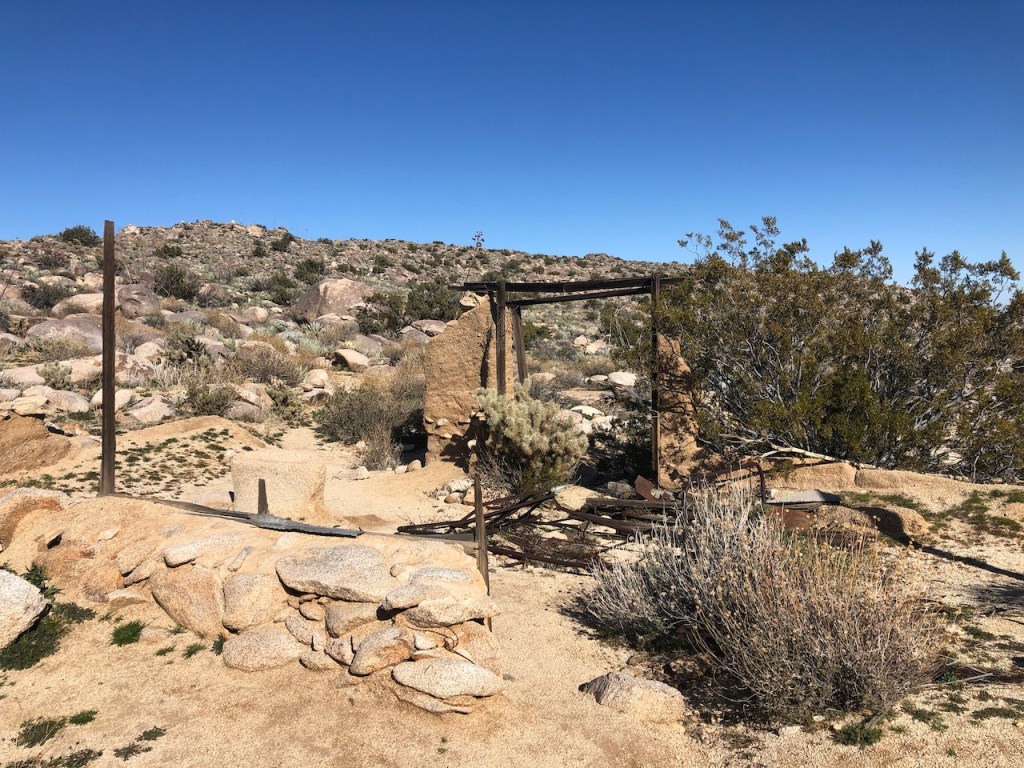
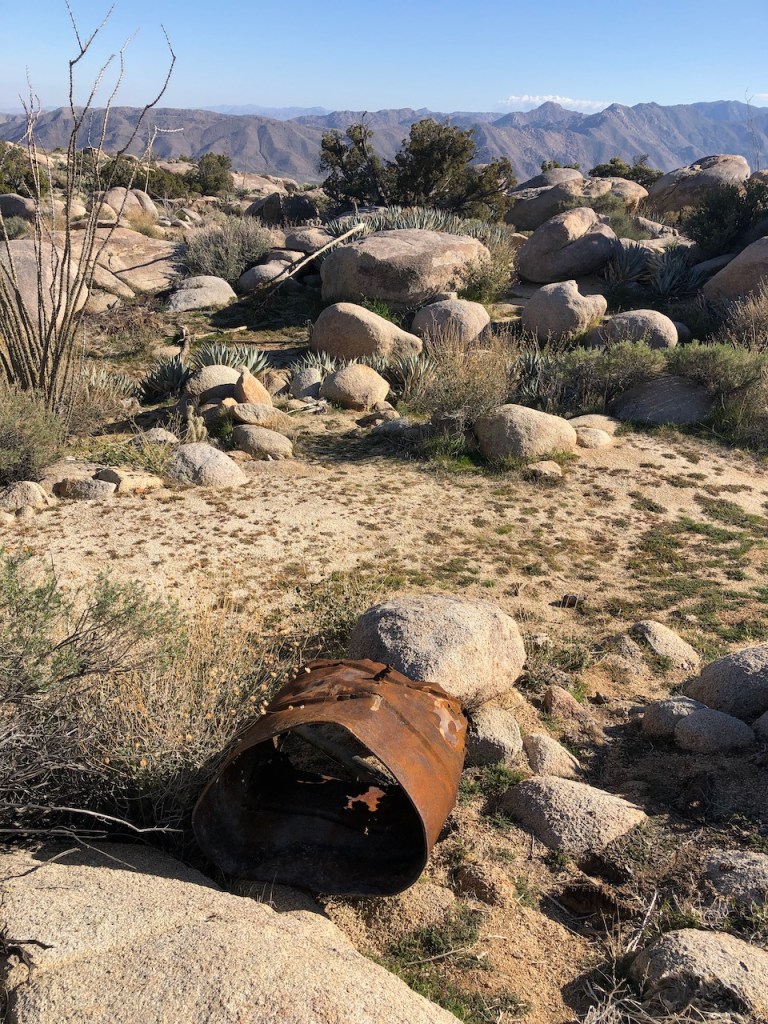
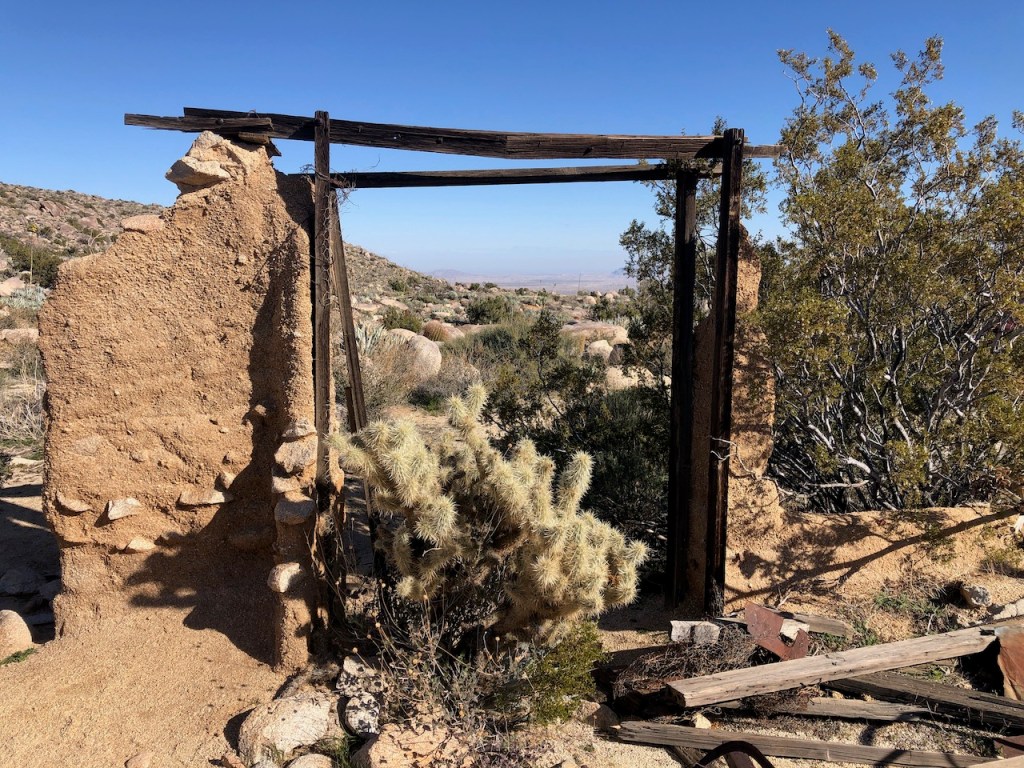
The home now sits in arrested decay, complete with historical objects, such as an old bed frame, slowly disintegrating in the harsh desert environment.
Patriotism
South cared very much about patriotism, and our national defense, in a time when many foreign nations were presumed to be a threat to our freedoms.
A Debate Club
He formed a debate club in Oceanside, and gave a speech entitled, “National Defense and the fallacy of disarmament,” at one of their local meetings.
A Rifle Club
He then went on to participate in the organization of a local rifle club, which would later be associated with the National Rifle Association.
The National Defense League
He organized a National Defense League, and started to take an active leadership role, in organizing patriotic individuals, to take more active roles in defending our freedom.
A Writer Poet and Soldier
His poems would be published in not only local publications, such as The Oceanside Blade, but the American Magazine, and the LA Tribune. As this “poet-soldier,” started to gain national recognition, he would later meet with President Roosevelt to discuss matters of defense.
Camp Henry
In 1916 he headed to Camp Henry, as he was drafted into the army. He married a painter named Martha, they married, and had a son, in Arizona. She asked to leave him, after just two years, since he was not a good provider.
Alone in the Desert
He was understandably distraught, and during the next two years, would retreat to the desert alone, camping out, trying to deal with things the best way he knew how.
A Second Marriage
Marshall and Martha would stay in touch through letters, but eventually would move one, finding someone new. While working as a carpenter at the Rosicrucian Fellowship in Oceanside, he met his future wife Tanya, a healer, who he would reside with on Ghost Mountain.
A Return to Nature
It was the time of writers such as Ralph Waldo Emerson, when a popular theme was a return to nature. South wrote an article for the Saturday Evening Post describing how as a family, “they did not want to be slaves to making money.
In Search of Peace and Solitude
They wanted to pursue more creative and spiritual endeavors. They wanted peace and solitude, and they wanted to experience a total sense of freedom—mentally and physically.”
Deciding to Live in the Desert
South and his wife Tanya would spend considerable time on camping trips to the desert, heading to the Blair Valley in his Model T. Eventually they decided to make it their permanent home, and build their homestead there, around 1930.

Subsistence
It was the depression, and they subsisted there on his relatively limited income, as a writer. They would have three more children, living the primitive lifestyle they desired, in the desert atop Ghost Mountain.
Yaquitepec
They would name their homestead Yaquitepec, after the Yaqui Indians, who were freedom loving, and with “tepec,” which means hill.
The home faced east, to catch the morning sun.
The Homestead’s Layout
It had two rooms, and the walls were two feet thick. It had an adobe stove, and 12 foot deep cellar. They tried to live as the tribes did, harvesting mescal, chia, and cactus, while hunting for rabbits.
Natural Materials
His wife used Yucca to weave chairs, and baskets. He was not just a writer, and poet, but an artist. He enjoyed painting, printmaking, ceramics, and creating sculptures.
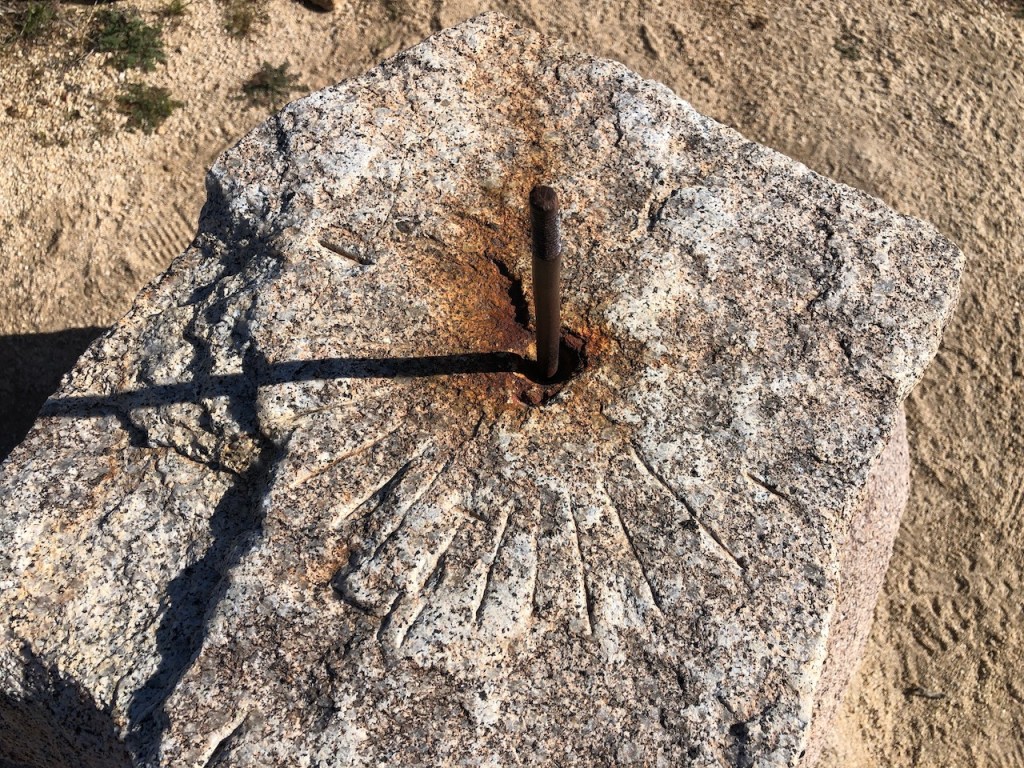
There is a sundial still intact on the homestead, a piece of rebar, encased in a rock, that at first seems like something from the Dada artist movement.
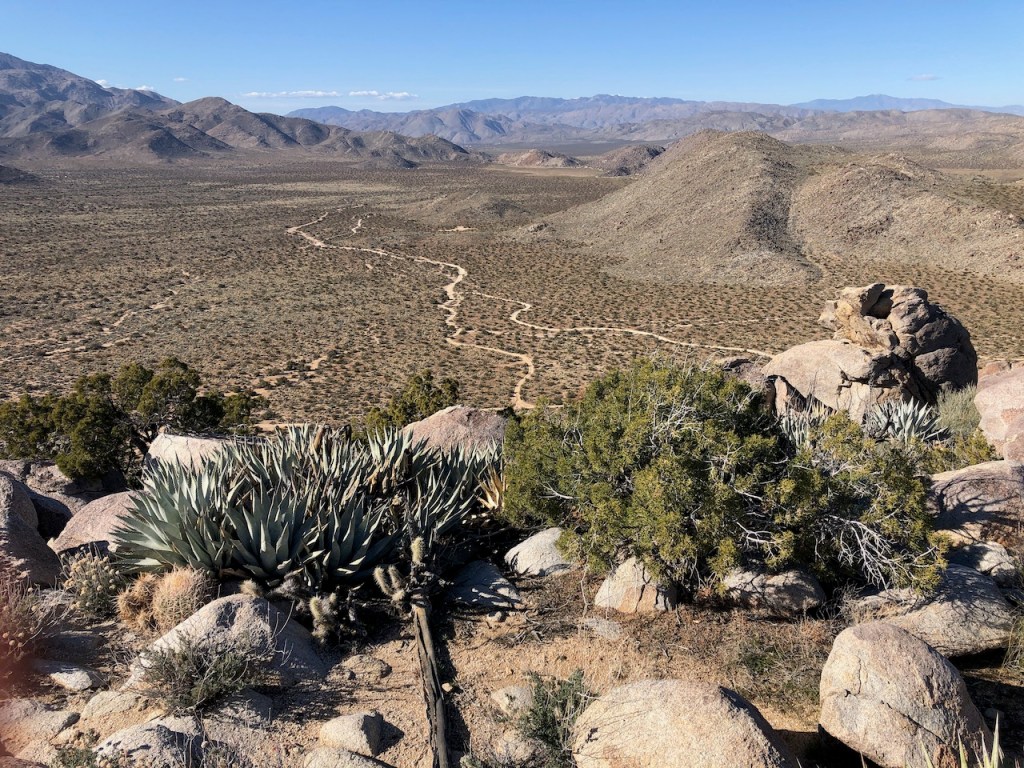
Looking to the north, and the unpaved roads leading to the trailhead.
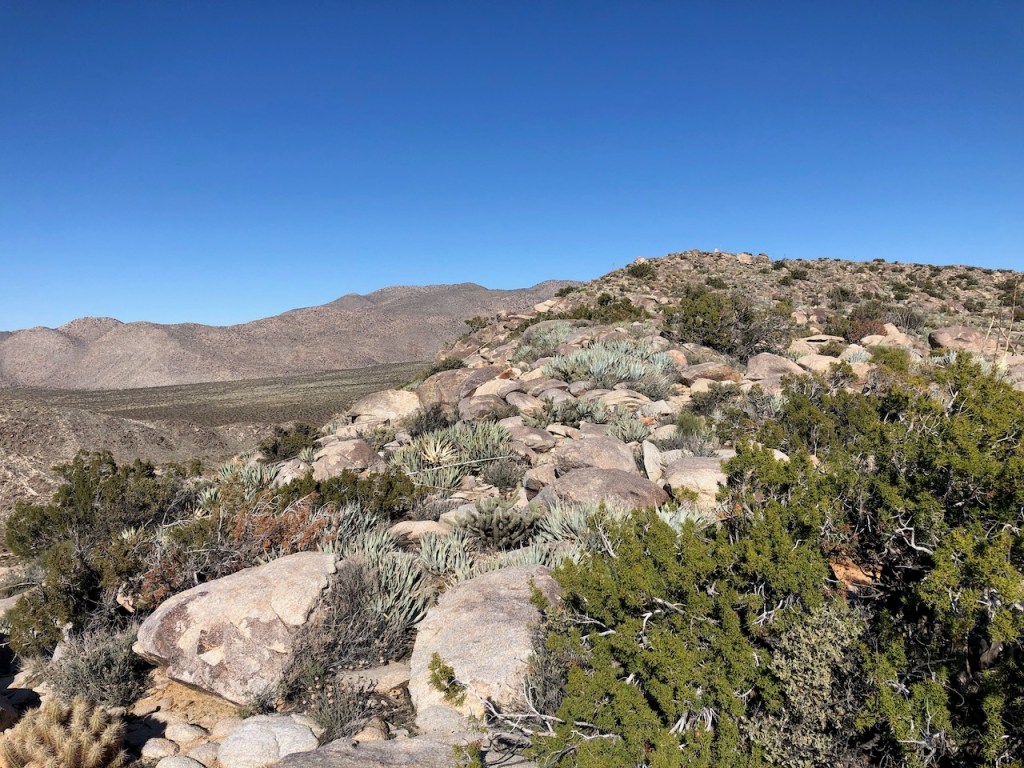
I decided to head to the summit of Ghost Mountain, even though there was no trail.

There were a few wildflowers in bloom amongst the cactus garden.
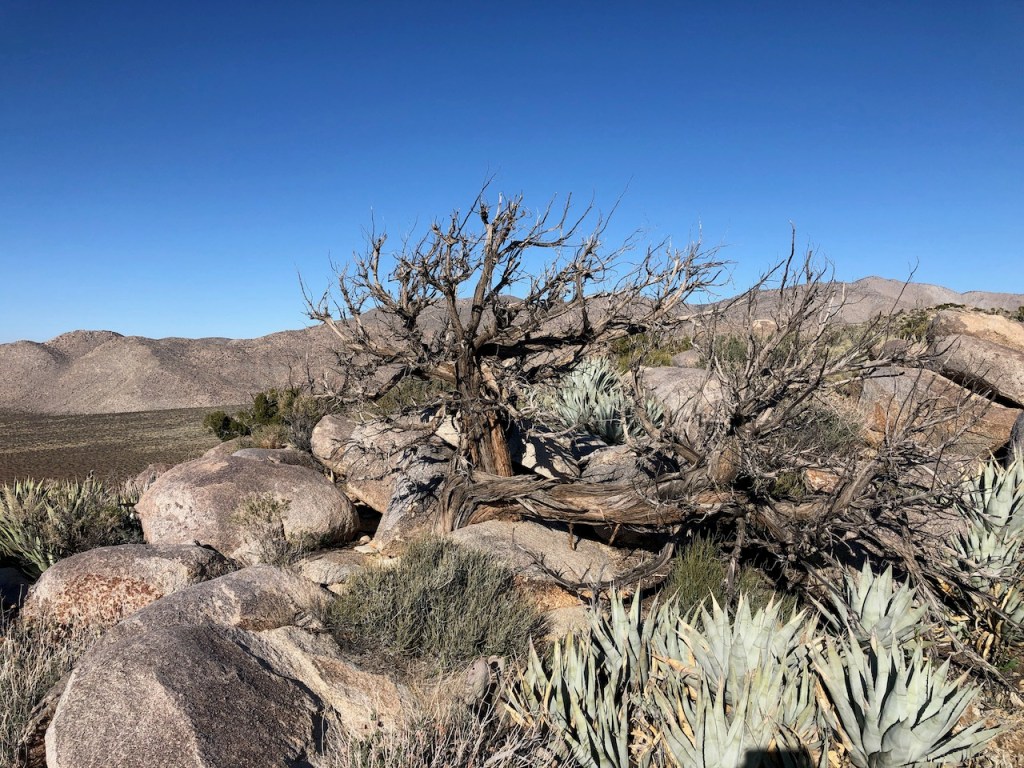
The yucca were rather sharp and unrelenting. I managed to avoid them for the most part, but was stuck more than a few times by their razor sharp dagger like fronds.
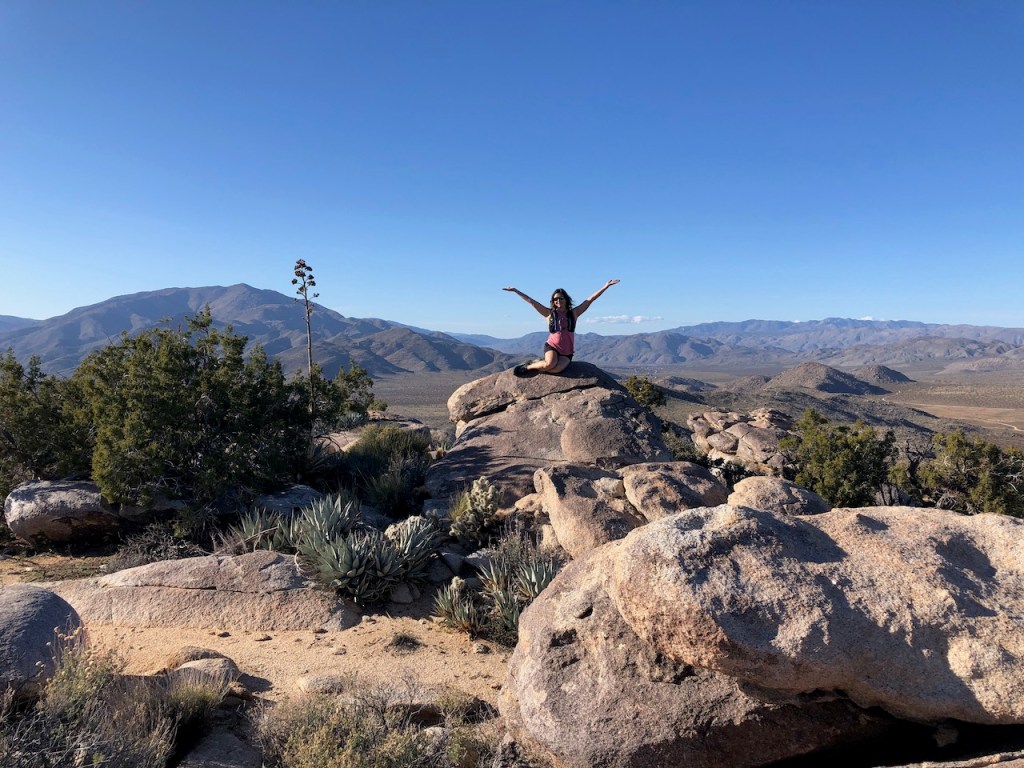
No risk, no reward. I navigated my way to what appeared to be the summit, though I could find no marker anywhere.
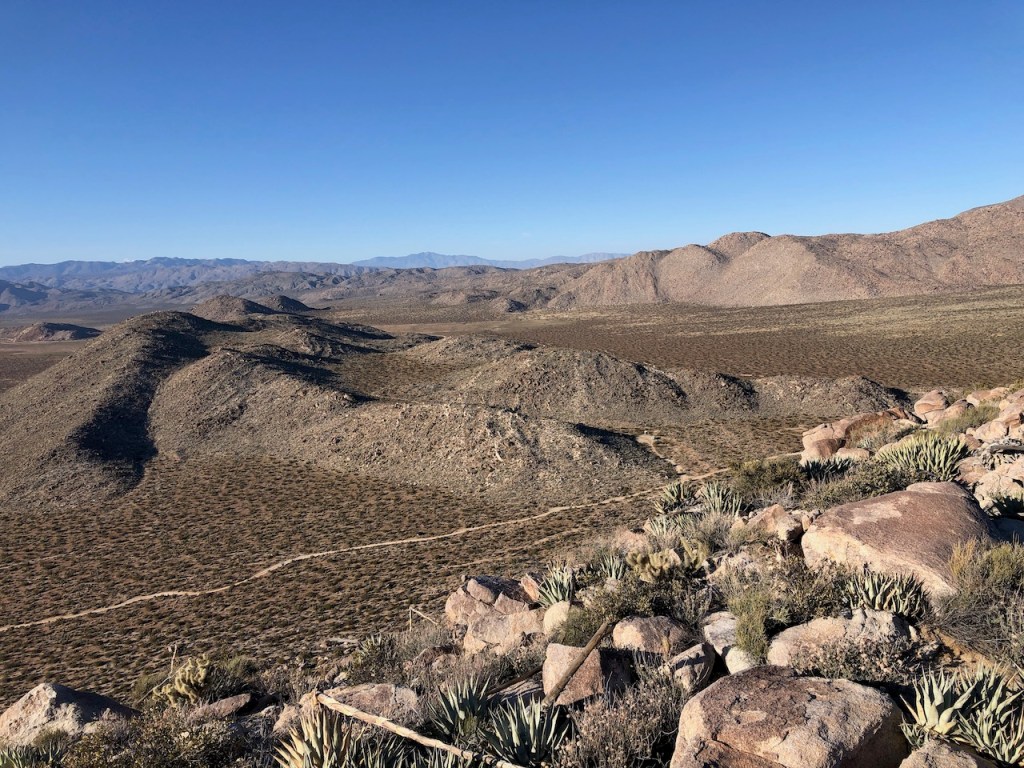
Looking off to Little Blair Valley on the right.
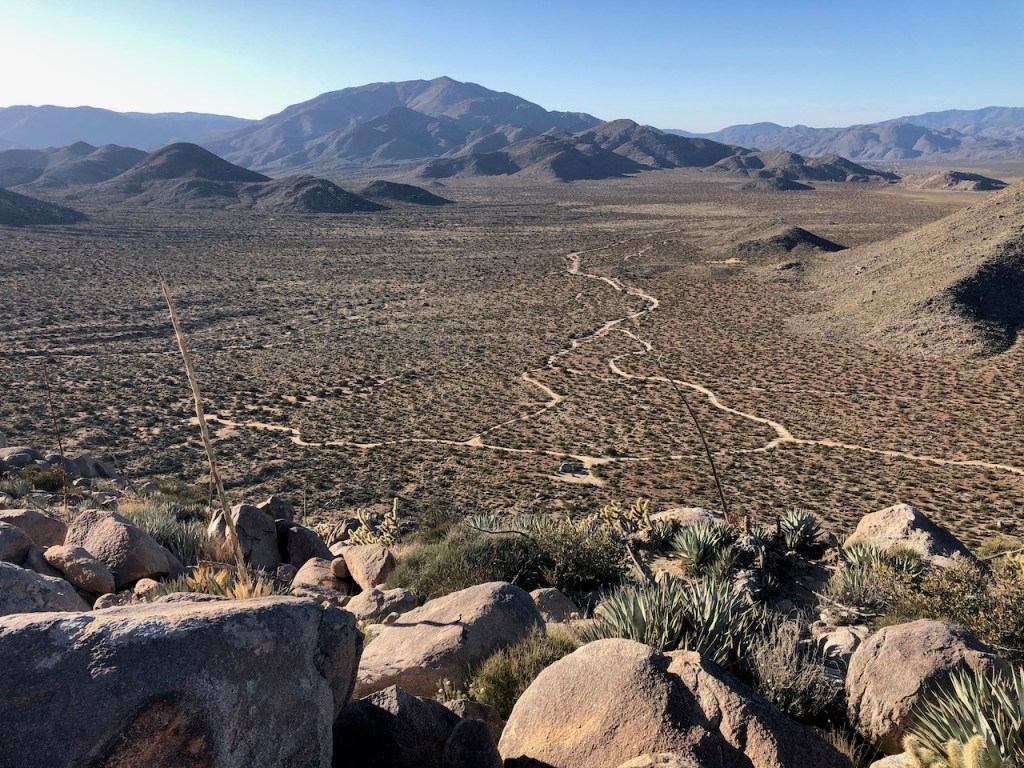
After a short break at the summit, it was time to head back the way I came.
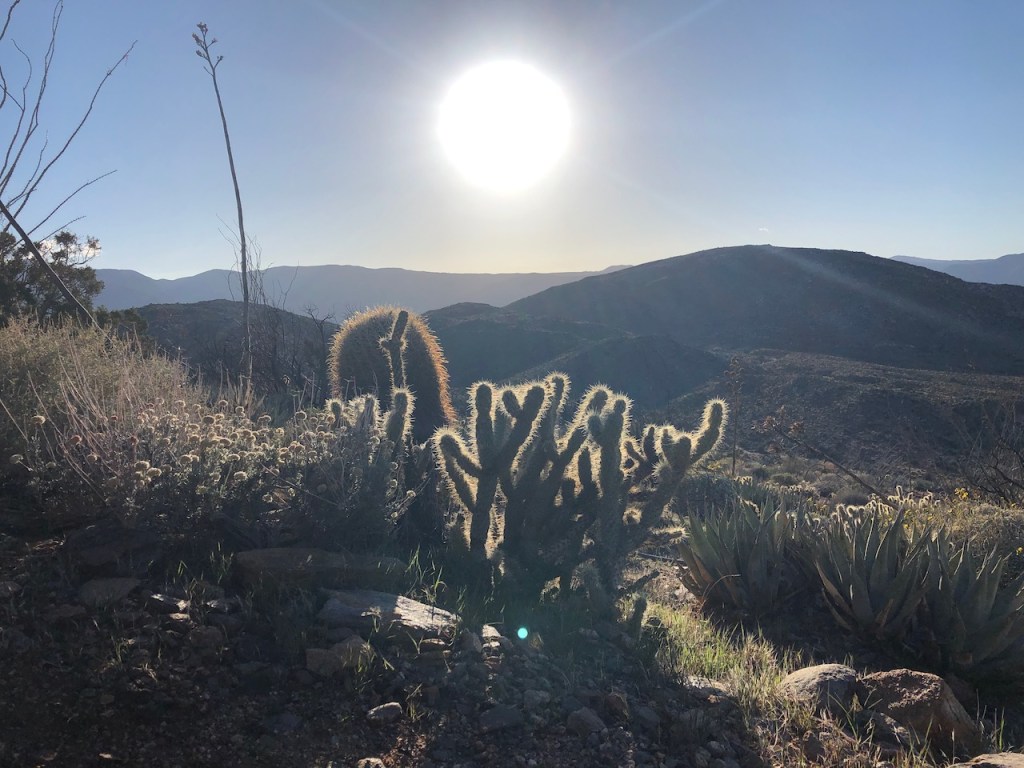
The desert is always an unforgettable experience, though it can be unforgiving, and harsh at the same time. It’s a wonder Marshall South and his family had the nerve to homestead here. There were few resources. The desert is and always will be risky business.
A Writer to the End
Marshall South first began sharing about his remote lifestyle, in a column for Desert Magazine, in 1938. He would live just 10 more years. In 1948, he passed away, and was buried in Julian, CA. His legacy of living an unconventional desert lifestyle lives on.
He Loved Freedom
He also stands out in history, as a man who valued freedom, where you can do as you please, free from governmental interference. He was someone who did not just talk about doing things, he took action. Though he was born in Australia, with his overflowing love of freedom, he was a true patriot at heart.
A Warrior Poet
Here is a poem Marshall South Wrote, called The Ancient Truth. You can read more about his story here, and in the book entitled, Ghost Mountain Chronicles. There is also a KPBS documentary about his life, you can watch here.
The Ancient Truth
We may agitate and threaten and declaim,
We may “watch and wait,” and afterwards atone;
But the painful age-old fact remains the same:
That our “dignity” rests on our arms alone.
By the Tigris, by the Tibur, by the Nile,
Through the long and weary ages of the past,
‘Twas the acts of those who “waited,” temporized, procrastinated
That lit the fires of ruin at the last.
For each blood-red sun that ever sank from sight,
Behind a plundered city’s flaming roar,
For each capital laid waste; for each haughty flag abased.
Lies the blame on heedless Peace and not on War.
We may talk of “brotherhood” and of “expense;”
We may blind our eye and put the matter by.
We may live in vapid dreams; in wild Socialistic schemes;
But if our armies fail us—then we die.
The Peace Dove twitters soothingly her song,
The visionary hearks with raptured ears,
Nor heeds the fact—hard proved by ages long—
That Peace Doves build their nests mid naked spears.
Now may we learn the ancient truth once more—
The truth that holds until the world shall cease—
On our battleships and guns; on the nation’s soldier sons,
Rests our only hope of long unbroken peace.
While our might is still unquestioned on the sea,
While our force defies invasion of our coast,
So long, no instant longer, may we hold,
The flag and liberty that is our boast.
– Marshal South, “Warrior Poet,” April 1914
About me
I’m Serafina! I’m a writer and California girl who loves to go exploring. Hope you will get outside today, breathe some fresh air, and be happy!
Follow my Journey…
Be sure to Like and Subscribe to My Youtube Channel where I post videos!
Disclaimer: The work on this blog is my opinion and my opinion alone and I am not responsible for the outcome if someone were to apply these thoughts to their own life. All text and photography copyright 2021 by Serafina, all rights reserved. Information and opinions provided are kept current to the best of the author’s ability. All readers’ usage of the ideas and opinions presented in the blog, are at their own risk. Be aware of the possible dangers of hiking, surfing, walking, cooking, and other activities, which may take place indoors or outdoors. By reading this, you agree not to hold the author or publisher of the content on this web site responsible for any injuries or inconveniences that may result from reading the blog, or partaking in any activity mentioned in the blog. Read the blog, and use its ideas, if you so desire, at your own risk.

 Serafina Hikes